Automated Market Makers (AMM): How Liquidity Pools Replace Order Books
Automated Market Makers (AMMs) revolutionized DeFi by replacing traditional exchange order books with "liquidity pools" powered by smart contracts. We analyze how this mechanism provides continuous liquidity and its inherent trade-offs.
Go Back
🕒 8:25 AM
📅 Oct 22, 2025
✍️ By Nathanael707
Defining the AMM Mechanism and Liquidity ProvisionAn Automated Market Maker (AMM) is a smart contract protocol that manages the exchange of assets automatically using a mathematical formula rather than relying on a traditional order book (buyers and sellers setting prices). Assets are deposited into a Liquidity Pool (LP) by users, and the AMM uses the ratio of assets in the pool to determine the current exchange rate and execute trades.
- Liquidity Pools (LPs) replace human market makers and order matching systems.
- The most common formula is X * Y = K, where X and Y are the quantities of the two assets, and K is a constant.
- Users who deposit assets into the pool are called Liquidity Providers (LPs) and earn a share of trading fees.
- AMMs ensure continuous liquidity, allowing trades to happen at any time, regardless of counterparty availability.
- The constant product formula enforces that the market value of the pool remains mathematically constant.
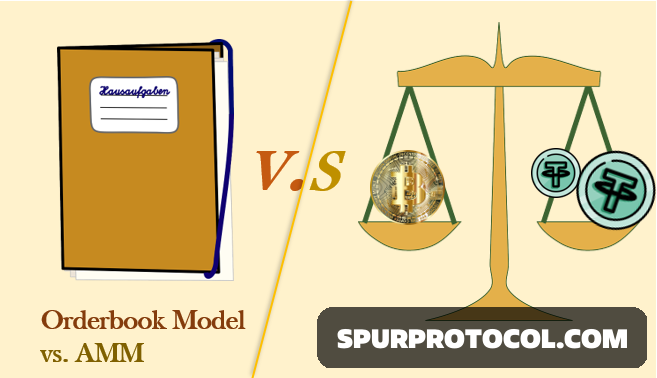
Weighted Comparison: AMM vs. Traditional Order BooksTraditional centralized and decentralized exchanges rely on an order book where buyers and sellers manually set bid and ask prices. This system is efficient for high volume but can suffer from low liquidity and wide spreads. AMMs sacrifice some capital efficiency for always-on liquidity. While order books offer better price control, AMMs offer unparalleled accessibility and decentralization.
- Liquidity: Always available (AMM) vs. Dependent on order depth (Order Book).
- Price Discovery: Formulaic (AMM) vs. Market-driven by bids/asks (Order Book).
- Decentralization: Full (AMM) vs. Centralized server (Traditional) or complex matching engine (DEX Order Book).
- Slippage: Higher on large trades (AMM) vs. Lower if book is deep (Order Book).
- User Role: Passive liquidity provider (AMM) vs. Active trader/market maker (Order Book).
Implementation and Trade Execution FlowWhen a user wants to swap Asset A for Asset B, the smart contract first calculates how much of Asset A is required to be deposited to maintain the constant ratio (K).The user deposits A, the contract automatically sends B, and the price is instantly updated for the next trader. The executed trade incurs a small fee, which is automatically distributed to the Liquidity Providers, incentivizing pool stability.
- The user interacts directly with the smart contract, eliminating the need for a central clearinghouse.
- The price is determined algorithmically by the ratio shift that occurs during the trade.
- Large trades cause a greater deviation from the original ratio, leading to higher slippage.
- Trading fees are programmatically collected and allocated to LPs and the protocol treasury.
- The constant product formula acts as an incentive mechanism to push external arbitrageurs to restore the pool's value parity.
Challenges and Considerations for Liquidity PoolsThe primary risk for liquidity providers is Impermenant Loss (IL), where the value of their deposited tokens decreases relative to simply holding the two assets outside the pool. Furthermore, AMMs suffer from poor capital efficiency, as most of the liquidity near the median price is rarely used. This has driven the development of concentrated liquidity models to address these flaws.
- Impermenant Loss: LPs risk losing value when the price ratio of the two assets changes dramatically.
- Slippage Risk: Large transactions can significantly impact the final execution price in shallow pools.
- Smart Contract Risk: The funds are vulnerable to bugs or exploits within the AMM's core smart contract code.
- Capital Inefficiency: Liquidity is distributed across all possible prices, wasting capital for active trading ranges.
- Front-Running/MEV: MEV bots can still profit by sandwiching large trades in the AMM mempool.