Beyond The Whitepaper: The Business Of Tokenomics

Why a great crypto idea isn't enough – understanding the economics that drive true value.

Go Back
Blog Thumbnail

🕒 5:57 AM

📅 Nov 27, 2025

✍️ By k6924

In the fast-paced world of cryptocurrency, a brilliant idea or groundbreaking technology is often just the beginning. For any crypto project to achieve sustainable success and adoption, its underlying tokenomics must be meticulously designed and rigorously implemented.

Tokenomics, a portmorphism of "token" and "economics," refers to the study of how a cryptocurrency token's supply, demand, distribution, and utility are structured. It's essentially the economic policy of a blockchain project.
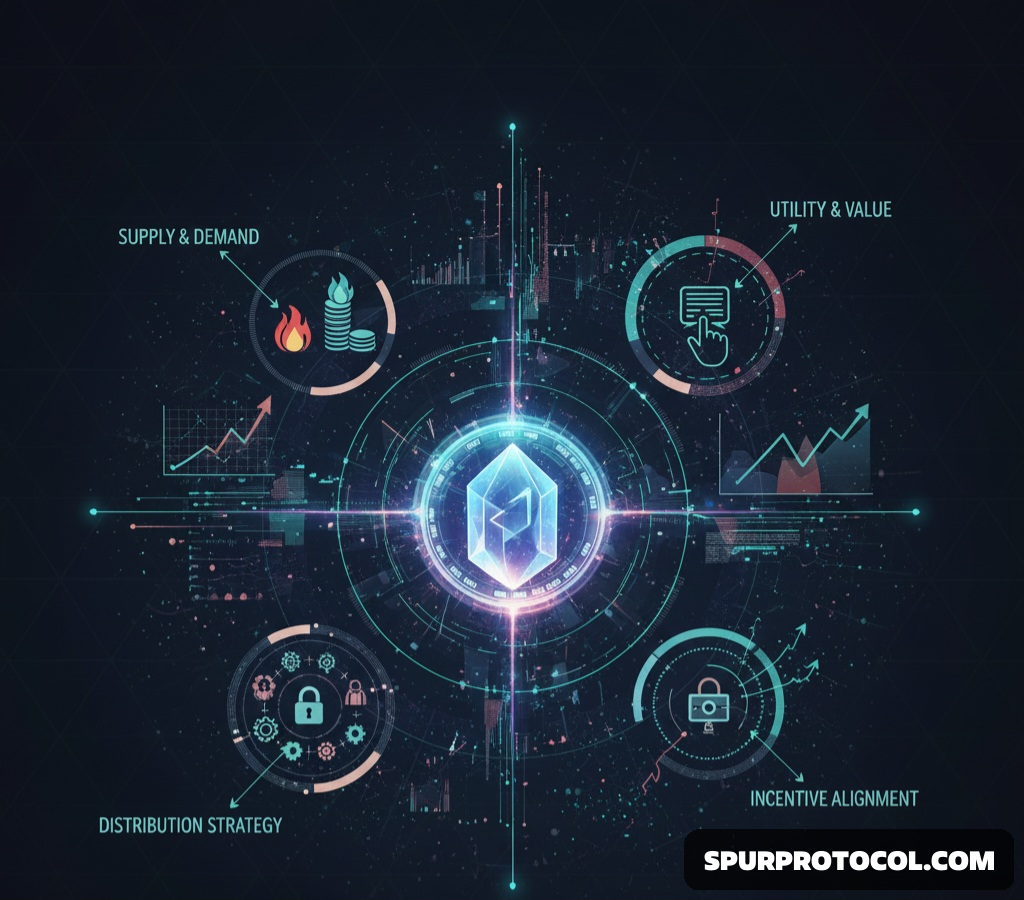
• ​Supply and Demand Mechanics: This includes understanding the total supply, circulating supply, inflation/deflation mechanisms (e.g., burning, staking rewards), and vesting schedules for team members and early investors. A poorly managed supply can lead to excessive inflation, diluting value, or scarcity that stifles adoption.
• ​Utility and Value Proposition: What purpose does the token serve within its ecosystem? Is it used for governance (voting rights), staking (network security), transaction fees, access to exclusive features, or as a medium of exchange? A strong, clear utility drives demand and gives the token intrinsic value beyond mere speculation.
• ​Distribution Strategy: How are tokens initially distributed? Through ICOs, IDOs, airdrops, mining, or staking rewards? A fair and decentralized distribution helps prevent concentration of wealth and promotes community engagement.
• ​Incentive Alignment: Perhaps the most critical aspect, tokenomics must align the incentives of all participants – users, developers, validators, and investors – towards the long-term success and growth of the network. Well-designed incentives can encourage desired behaviors, like active participation and network security, while disincentivizing malicious actions.

Ultimately, robust tokenomics transforms a technological concept into a viable business model. It dictates how value is created, distributed, and sustained within a decentralized ecosystem, making it a cornerstone for any project aiming for long-term relevance and prosperity in the crypto space.