Blockchain And Data Privacy – Can It Meet GDPR Requirements?
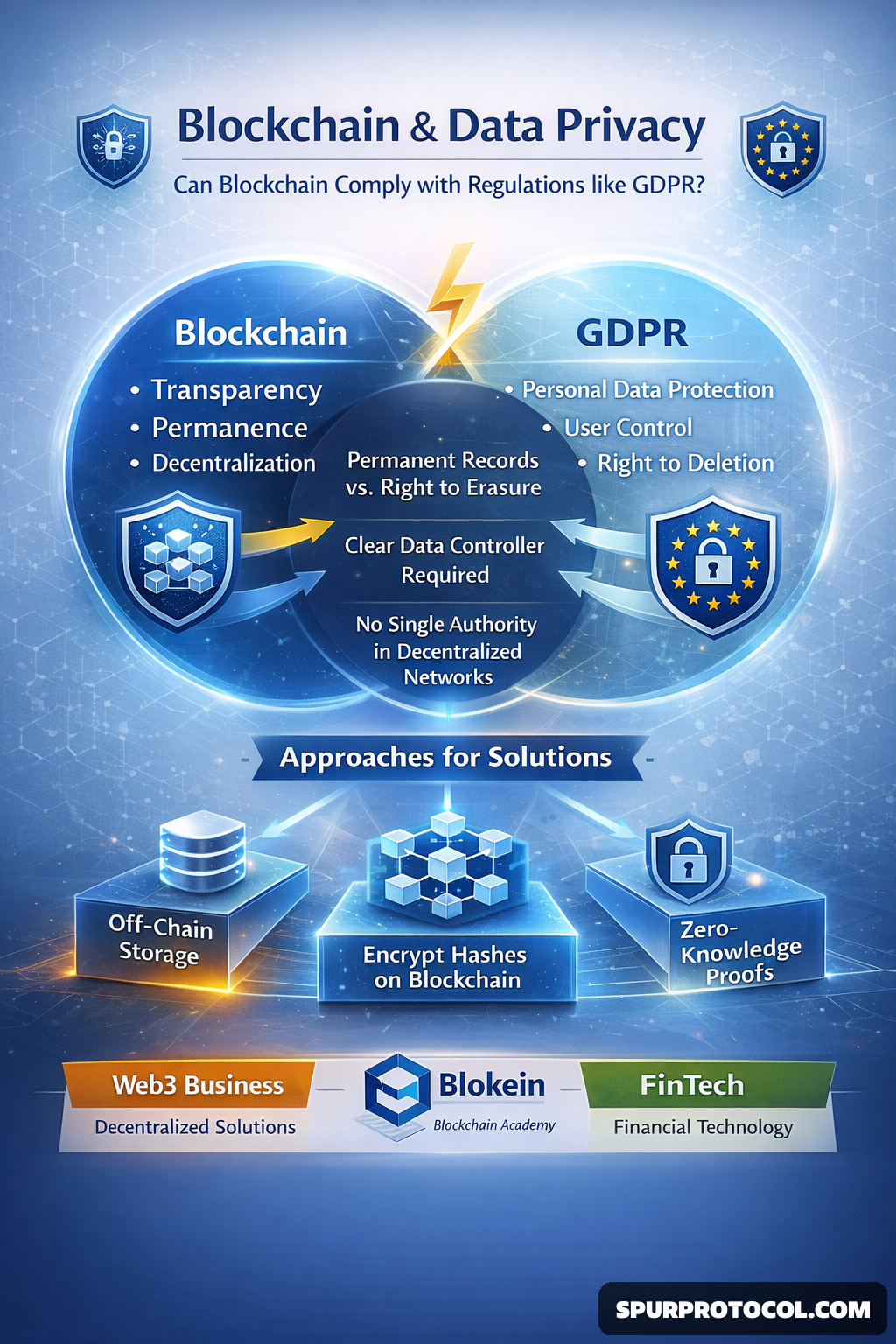
Blockchain is built on transparency, permanence, and decentralized validation. In contrast, the General Data Protection Regulation (GDPR) prioritizes personal data protection and grants individuals control over their information, including the right to request its deletion. These principles can seem contradictory. As blockchain adoption expands, a key question arises: can decentralized systems comply with strict data protection regulations?
Go Back
🕒 2:35 PM
📅 Feb 23, 2026
✍️ By Goko7
The Challenge: Permanent Records vs. Data Deletion Rights
A key characteristic of blockchain is immutability. Once information is added to the ledger, it is extremely difficult to modify or remove. This feature strengthens trust and prevents tampering, but it also creates tension with privacy regulations that allow individuals to request the removal of their personal data.
If personal information is stored directly on a blockchain, deleting it later may not be technically feasible. This creates potential legal risks, especially in regions where privacy laws strictly enforce the right to erasure.
Another complication involves accountability.
Privacy regulations require clear identification of the entity responsible for managing personal data. In decentralized systems, there is no single authority. Instead, responsibility may be shared among network participants, developers, or platform operators, making compliance more complex.
Privacy-Oriented Blockchain Design Strategies
To reduce these risks, many blockchain solutions avoid placing sensitive data directly on the blockchain. Instead, personal information is stored in secure off-chain systems, while the blockchain records only encrypted proofs or digital fingerprints known as hashes. This approach preserves the benefits of blockchain without exposing private information.
Emerging cryptographic methods, such as zero-knowledge proofs, provide additional protection. These techniques allow a system to confirm that certain conditions are met without revealing the actual underlying data. As a result, organizations can verify identity or compliance while maintaining confidentiality.
These design methods help bridge the gap between blockchain transparency and privacy protection.
Moving Toward Regulatory Compliance
Blockchain technology and privacy laws are not fundamentally incompatible, but compliance depends heavily on how systems are designed and implemented. Organizations must carefully evaluate how personal data is handled and ensure their blockchain solutions align with applicable legal standards.
Hybrid architectures are becoming increasingly common. These models combine decentralized blockchain infrastructure with traditional secure storage and privacy controls. This balanced approach allows organizations to benefit from blockchain’s security and transparency while respecting user privacy rights.
As both technology and regulations continue to evolve, blockchain systems that prioritize privacy by design are more likely to meet modern data protection requirements and play a sustainable role in the digital economy.