Blockchain In Agriculture – Tracking Food From Farm To Consumer Using Digital Tokens
The global food supply chain includes farmers, processors, distributors, retailers, and regulators across different regions. This complexity makes transparency, food safety, and fair payments difficult to ensure. Blockchain offers a way to track agricultural products using secure digital records and tokens, improving visibility and accountability. The key question is whether this technology can significantly improve how food is monitored from production to distribution.
Go Back
🕒 8:06 AM
📅 Feb 28, 2026
✍️ By Goko7
Stronger Traceability and Improved Food Safety
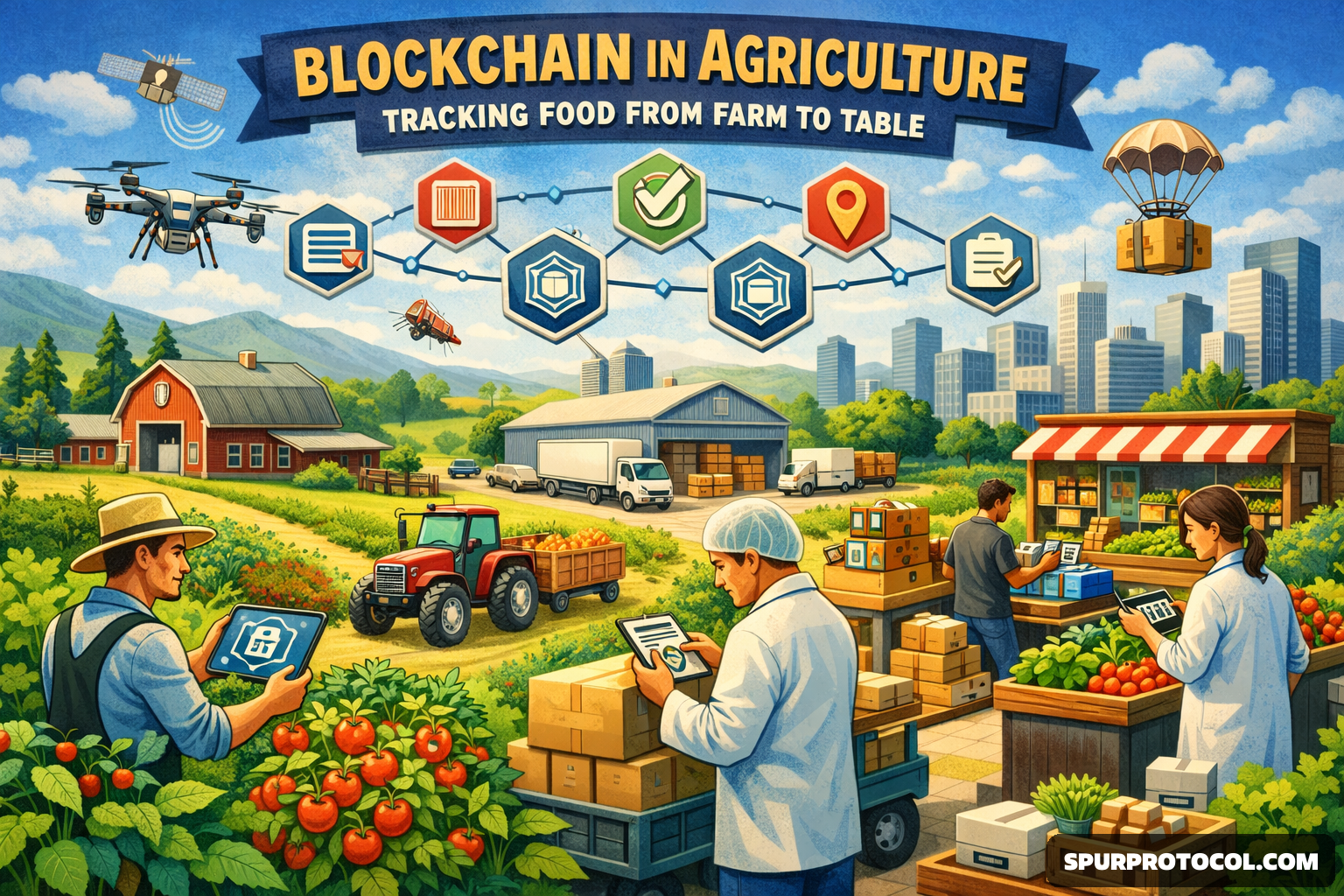
One of the key benefits of blockchain in agriculture is its ability to create a clear and reliable history for each product. Every stage — from harvesting and processing to transportation and final delivery — can be recorded in a secure digital ledger. Because this information cannot be easily altered, it provides a trustworthy record of where the product came from and how it was handled.
If a contamination issue or quality problem arises, the exact origin can be identified much faster. This allows companies to isolate only the affected batches instead of recalling entire shipments unnecessarily. As a result, waste is reduced, response times are shorter, and consumers gain more confidence in the safety and authenticity of their food.
Tokenization and Better Supply Chain Efficiency
Blockchain also allows agricultural goods to be represented by digital tokens. These tokens can store important verified details such as the harvest date, location, certifications, and storage or transport conditions. Each time the product changes ownership, the associated token is updated to reflect the new status.
Smart contracts can further enhance efficiency by automatically releasing payments once delivery conditions are met and confirmed. This reduces delays, eliminates many manual processes, and minimizes disputes. Farmers, in particular, benefit from faster payments, which helps improve their cash flow and financial security.
Challenges That Must Be Addressed
Despite its potential, blockchain adoption in agriculture comes with practical challenges. The system depends heavily on accurate data entry at the starting point. While blockchain protects stored data from being altered, it cannot verify whether the original input was correct. In addition, reliable internet access and proper digital infrastructure are necessary, which may not always be available in rural farming areas.
Another important factor is integration. Existing logistics systems, operational workflows, and food safety regulations must be aligned with blockchain solutions, requiring coordination and investment from multiple stakeholders.
Building a More Transparent and Reliable Food System
Blockchain technology has the potential to make agricultural supply chains more transparent, secure, and efficient. By combining traceability, digital tokenization, and automated processes, it can help strengthen trust between producers, distributors, and consumers.
Although widespread implementation will take time, blockchain could play a significant role in modernizing how food moves from farms to consumers, creating a more accountable and resilient agricultural ecosystem.