Blockchain Strengthen Protection Against Cyber Threats?
As cyber threats continue to evolve and become more advanced, both organizations and individuals are looking for more reliable ways to protect their data. Incidents such as data breaches, ransomware, and identity theft highlight the vulnerabilities of traditional centralized systems. In this context, blockchain technology has gained attention as a promising solution for improving cybersecurity—but can it really enhance protection against today’s digital threats?
Go Back
🕒 5:18 AM
📅 Feb 20, 2026
✍️ By Goko7
How Blockchain Strengthens Cybersecurity Protection
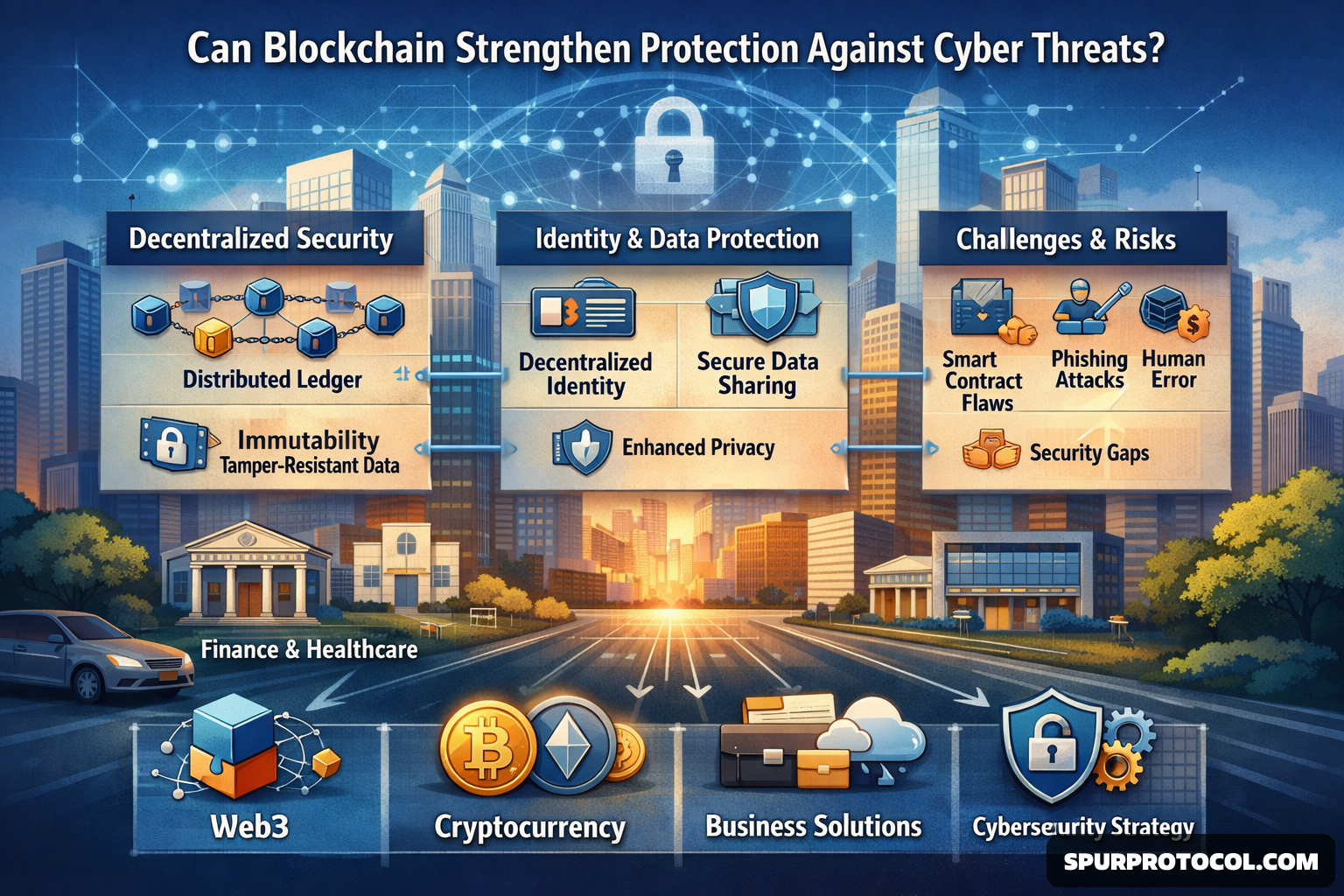
Blockchain technology improves cybersecurity by using a decentralized and distributed ledger. Instead of relying on a single central server, data is stored and verified across multiple network nodes. This decentralized structure reduces the risk of a single point of failure, making it significantly more difficult for attackers să compromită întregul sistem printr-un singur punct vulnerabil.
Another important security advantage is immutability. Once information is recorded on the blockchain, it cannot be modified or deleted without agreement from the network. This ensures the integrity of transaction records and digital logs, making unauthorized changes extremely difficult. For sectors such as finance, healthcare, and critical infrastructure, this level of data protection enhances trust and reliability.
Role of Blockchain in Identity and Data Protection
Blockchain technology can also improve digital identity security by allowing users to control their own credentials. Through decentralized identity systems, individuals can verify specific information without exposing unnecessary personal data. This reduces reliance on centralized databases, which are often primary targets for large-scale cyber attacks.
In addition, blockchain enhances transparency and traceability. Every transaction is recorded and can be audited, creating a clear and verifiable activity history. This helps organizations detect suspicious behavior faster and respond more effectively to potential security incidents.
Challenges and Practical Limitations
Despite its advantages, blockchain is not a complete cybersecurity solution on its own. Security risks can still arise from poorly designed smart contracts, compromised user wallets, or vulnerable external applications. Furthermore, human factors such as phishing, weak passwords, and social engineering remain major causes of security breaches.
This lesson highlights that blockchain can significantly strengthen cybersecurity protection, particularly by reducing risks associated with centralized systems and improving data integrity. However, its effectiveness depends on proper implementation and integration with other security measures. As cyber threats continue to evolve, blockchain has the potential to become a critical component of modern cybersecurity strategies, supporting safer and more resilient digital environments.