Crypto Derivatives On Decentralized Exchanges – Can They Rival Centralized Platforms?
Derivatives trading has become one of the most dynamic areas of the cryptocurrency market. These financial instruments allow traders to profit from price movements without actually holding the underlying digital asset. For years, most derivatives activity has been concentrated on centralized exchanges, which offer strong liquidity, sophisticated trading tools, and the possibility of using leverage.
Go Back
🕒 12:29 PM
📅 Mar 09, 2026
✍️ By Goko7
Recently, however, decentralized exchanges have begun building their own derivatives ecosystems, attempting to deliver similar trading opportunities while keeping everything on-chain. This naturally leads to an important discussion: are decentralized derivatives platforms capable of competing with traditional centralized exchanges?
Understanding Crypto Derivatives on DEX Platforms
Crypto derivatives are contracts whose value depends on the price of another asset, typically major cryptocurrencies such as Bitcoin or Ethereum. Among the most common forms are perpetual futures, options contracts, and various leveraged products designed for more advanced strategies.
On decentralized exchanges, these instruments operate differently from their centralized counterparts. Instead of relying on a company or intermediary to manage trades, transactions are executed through smart contracts on a blockchain. Traders connect their digital wallets directly to the platform and interact with the protocol without transferring custody of their funds.
This structure means that the trading process becomes automated and transparent. The rules governing orders, liquidations, and settlements are written directly into the smart contract code. Many decentralized derivatives platforms also rely on liquidity pools and automated market-making mechanisms rather than the traditional order books that centralized exchanges typically use.
Key Benefits of Decentralized Derivatives Trading
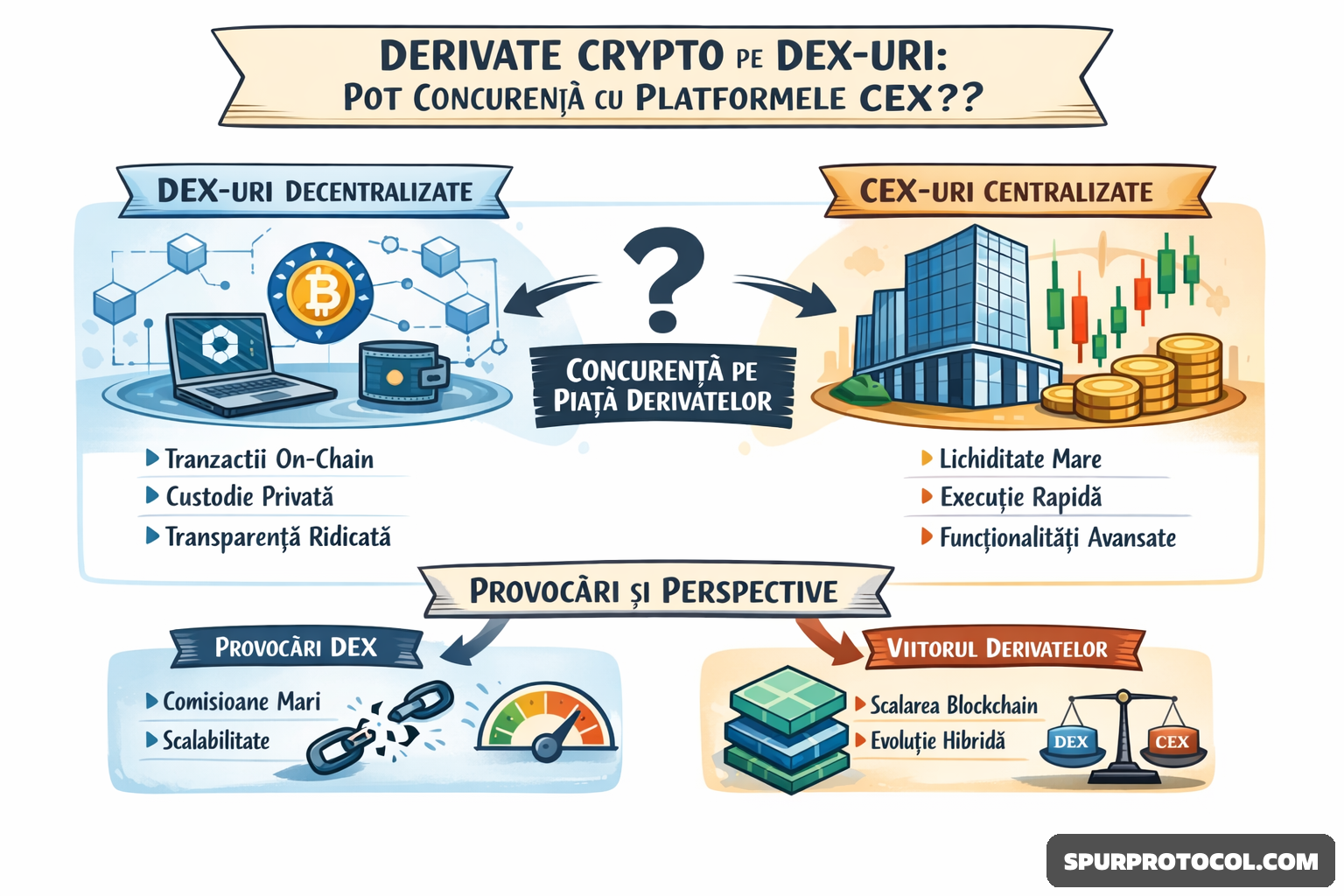
One of the strongest advantages of derivatives trading on decentralized platforms is transparency. Because everything runs on public blockchain infrastructure, the movement of funds and the logic of the trading system can be verified by anyone.
Another important benefit is self-custody. Traders maintain full control of their assets throughout the trading process instead of depositing funds into an exchange-controlled account. This significantly reduces exposure to risks such as exchange failures, hacks, or frozen withdrawals.
Decentralized platforms also tend to be more open in terms of accessibility. In many cases, users only need a compatible crypto wallet to start trading, without completing lengthy account verification procedures. This makes participation possible for a wider global audience.
Obstacles That Still Favor Centralized Exchanges
Even with these advantages, decentralized derivatives platforms are still catching up in several areas. Centralized exchanges generally provide much deeper liquidity, allowing large orders to be executed with minimal price impact. They also offer extremely fast execution speeds, which is crucial for active traders who rely on precise timing.
Transaction fees and network congestion can also influence the trading experience on decentralized systems. When blockchain networks become busy, trading costs may increase and transactions may take longer to finalize, which can be problematic for strategies that require rapid adjustments.
Ease of use is another factor. Although
decentralized trading interfaces are improving quickly, many users still find centralized exchanges more intuitive, especially when dealing with complex derivatives tools and advanced order types.
What the Future May Look Like
The growing interest in decentralized derivatives reflects a broader shift within the crypto industry: the effort to combine sophisticated financial products with decentralized infrastructure. Ongoing improvements in blockchain scalability and the development of layer-two solutions could significantly reduce transaction costs and increase execution speed on decentralized platforms.
While centralized exchanges continue to dominate the derivatives market today, decentralized alternatives are steadily evolving. It is increasingly likely that the future ecosystem will include both models. Centralized exchanges may continue serving high-volume professional traders, while decentralized platforms attract users who prioritize transparency, control over funds, and open access to financial markets.