Cryptoeconomics And Incentive Design
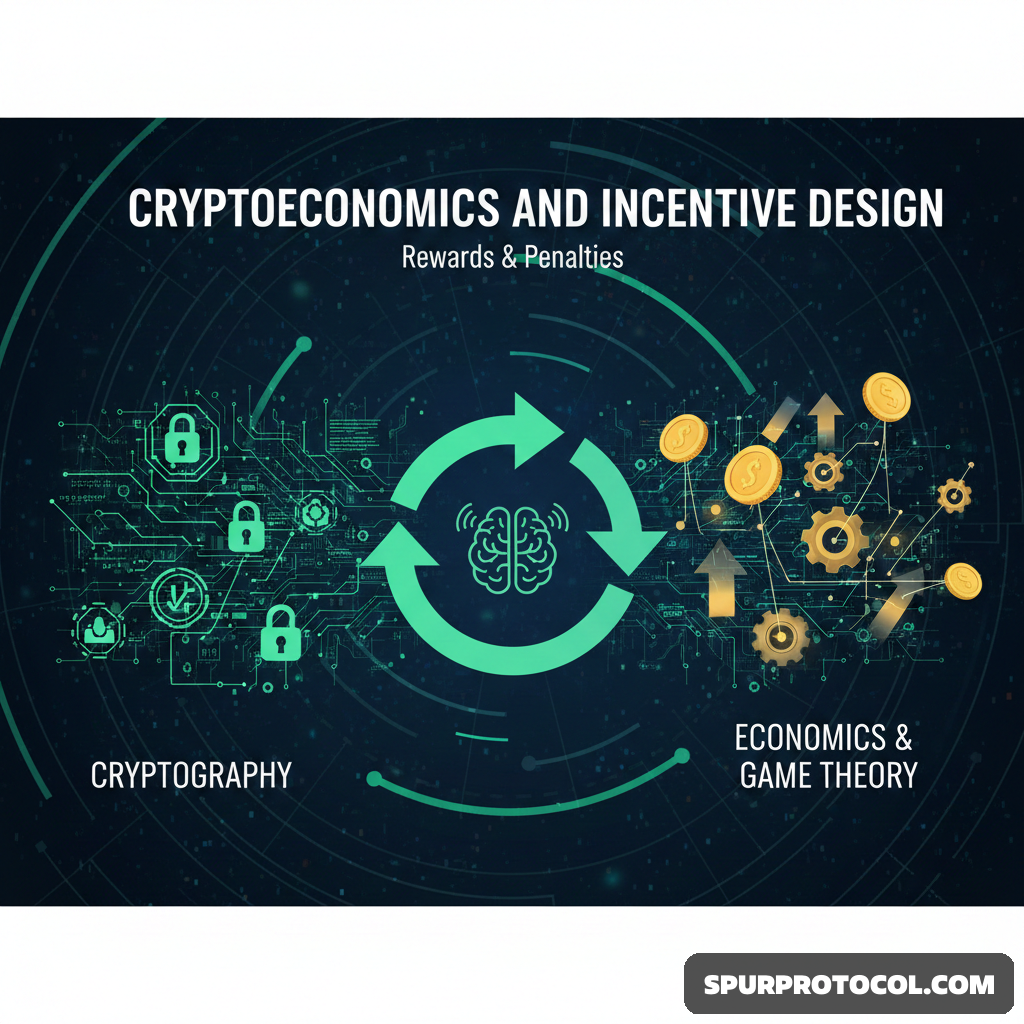
Cryptoeconomics is essentially the "physics" of the decentralized world. It is an interdisciplinary field that uses cryptography to prove things that happened in the past and economic incentives to encourage things to happen in the future.
Go Back
🕒 9:01 PM
📅 Jan 06, 2026
✍️ By chyneyz
While cryptography ensures that a message is authentic, incentive design ensures that humans (and their machines) actually bother to send and verify those messages correctly.1. The Core Components
Cryptoeconomics is often described as the intersection of three pillars:
Cryptography: Provides the "hard" rules (signatures, hashes, zero-knowledge proofs). It makes it physically/mathematically impossible to forge a transaction.
Economics: Provides the "soft" rules (rewards and penalties). It makes it financially irrational to attack the system.
Game Theory: The study of strategic decision-making. It models how rational actors will behave when they know everyone else is also acting in their own self-interest.
2. Incentive Design (Mechanism Design)
In traditional economics, we observe how people behave in a market. In cryptoeconomics, we use Mechanism Design (sometimes called "reverse game theory"), where we define a desired outcome first and then work backward to create the rules and incentives that lead to it.
3. Classic Examples in Practice
Bitcoin: The "Honesty" Game
Satoshi Nakamoto’s breakthrough wasn't just the blockchain; it was the realization that you don't need to trust miners if you make it more profitable for them to be honest.
The Incentive: If you have massive computing power, you could try to attack the network. However, doing so would likely crash the price of Bitcoin, making your rewards worthless.
The Result: It is smarter to use that power to earn "legit" Bitcoin rewards.
Proof of Stake (PoS): Skin in the Game
In networks like Ethereum, validators must "stake" (lock up) their own capital.
The Design: If you behave, you get a yield. If you try to cheat, your capital is "slashed" (destroyed). This creates a direct financial link between the security of the network and the validator's net worth.
Token-Curated Registries (TCRs)
These use incentives to create decentralized "Top 10" lists (e.g., a list of reputable doctors).
The Design: Token holders vote on who gets on the list. If they curate a high-quality list, the token becomes valuable. If they let in low-quality entries, the list becomes useless, the token loses value, and the curators lose money.
4. Common Design Challenges
Designing these systems is notoriously difficult because of "edge cases" where human greed outsmarts the code:
The Sybil Attack: One person creating 1,000 fake identities to manipulate a vote. (Solved by requiring "Proof of Work" or "Proof of Stake").
The Tragedy of the Commons: If transaction fees are too low, who will pay to secure the network in the long run?
Incentive Alignment: Ensuring that what is good for the individual is always what is good for the network.