Decentralization In Cryptocurrency: Why It Matters
In the fast-evolving world of cryptocurrency, few concepts are as fundamental — or as misunderstood — as decentralization.
At its core, decentralization means that no single person, company, or government controls the network. Instead, control and decision-making power are distributed across a global network of participants.
Go Back
🕒 10:45 PM
📅 Feb 18, 2026
✍️ By boaharu
In the fast-evolving world of cryptocurrency, few concepts are as fundamental — or as misunderstood — as decentralization.
At its core, decentralization means that no single person, company, or government controls the network. Instead, control and decision-making power are distributed across a global network of participants.
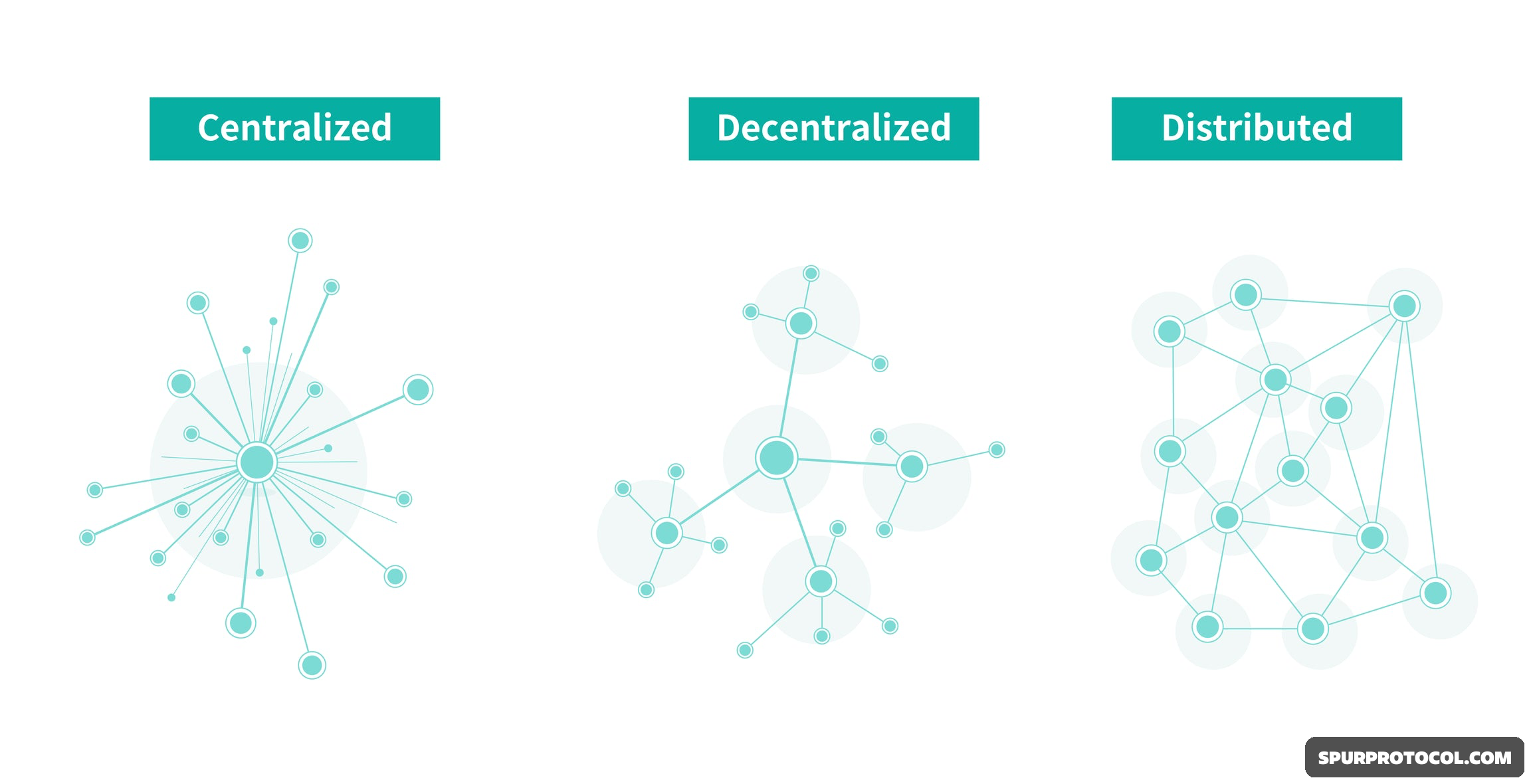
Centralized vs. Decentralized Finance
Think about traditional banking: When you send money, it goes through banks, payment processors, and regulators. These centralized institutions decide if the transaction is allowed, how much it costs, and they can freeze your account. They are single points of failure — if they go down, get hacked, or act maliciously, users suffer.
Cryptocurrencies were created to remove these middlemen.
How Decentralization Works
Cryptocurrencies operate on blockchain technology — a transparent, public ledger maintained by thousands of computers (called nodes) around the world.
• Every transaction is broadcast to the network.
• Nodes verify transactions according to the protocol’s rules.
• Once validated through consensus mechanisms (like Bitcoin’s Proof-of-Work or Ethereum’s Proof-of-Stake), transactions are added to blocks and become nearly impossible to alter.
Because no single entity owns or controls the majority of the network, the system is resistant to censorship and shutdown.
Key Benefits
• Security & Resilience: There is no central server to hack.
• Censorship Resistance: Anyone with internet can participate.
• Transparency: All transactions are publicly visible and verifiable.
• Ownership: You control your funds with your private keys (“Not your keys, not your coins”).
Real-World Examples
• Bitcoin (BTC): The most decentralized cryptocurrency. Launched in 2009, it has no CEO, no headquarters, and continues to run perfectly through a global volunteer network.
• Ethereum: Powers decentralized applications (dApps), DeFi, and NFTs, allowing complex financial services without banks.
Challenges Ahead
Decentralization comes with trade-offs. Fully decentralized networks can be slower and more expensive than centralized ones. Governance (how to upgrade the system) can also be messy when there is no central leader.
Despite these hurdles, decentralization remains the core innovation of blockchain technology — shifting power from institutions to individuals and mathematics. It’s what makes crypto not just digital money, but a new financial paradigm