Governance Token Airdrops – Rewarding Community Participation
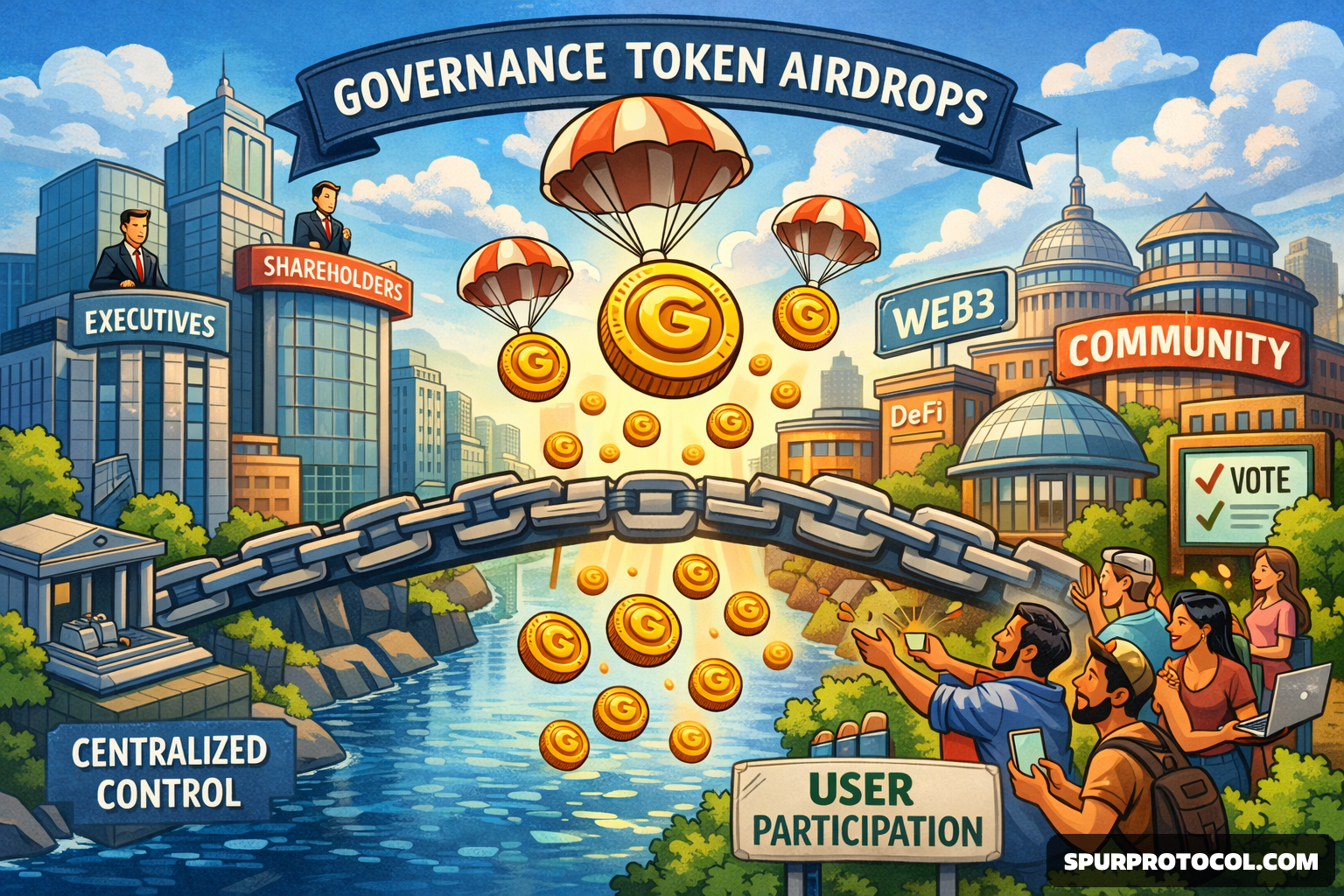
In the Web3 ecosystem, community participation is essential to a project’s success. Unlike traditional organizations, where decisions are controlled by executives and shareholders, decentralized platforms allow users to influence the project directly. This is often done through governance tokens, which are distributed using airdrops. This leads to an important question: do governance token airdrops truly reward meaningful community involvement?
Go Back
🕒 5:26 AM
📅 Mar 01, 2026
✍️ By Goko7
What Are Governance Token Airdrops?
Governance tokens allow holders to take part in the decision-making process of a decentralized project. By owning these tokens, users can vote on important matters such as protocol upgrades, budget allocation, or strategic direction. This approach helps ensure that control is shared among the community rather than concentrated in the hands of a small leadership group.
Airdrops are used to distribute these tokens to users who have actively interacted with or supported the platform. Eligibility is typically based on specific criteria, such as using the protocol, contributing liquidity, or engaging in community discussions. Through this process, projects recognize user involvement and encourage continued participation in governance.
Encouraging Engagement and Building Loyalty
Airdrops can play an important role in strengthening the relationship between a project and its community. By rewarding early supporters and active users, projects create a sense of recognition and ownership. This often motivates recipients to stay involved, participate in governance decisions, and contribute to the project’s long-term growth.
Furthermore, airdrops enable a wider and faster distribution of tokens compared to private investment rounds, where ownership may be limited to a small group of investors. A broader distribution helps promote decentralization and aligns the interests of both developers and users.
Challenges and Potential Risks
Despite their advantages, governance token airdrops also present certain challenges.
Some users may interact with a platform only to qualify for potential future rewards, without any genuine intention of contributing to the ecosystem. This behavior can artificially increase activity levels without creating real engagement or long-term value.
Another concern is the possibility of immediate token selling after distribution. When recipients quickly sell their tokens, it can lead to price instability and weaken the governance structure. To reduce this risk, some projects introduce vesting periods or additional requirements that encourage users to retain and actively use their tokens.
Balancing Incentives with Long-Term Sustainability
Governance token airdrops remain a powerful mechanism for building and expanding decentralized communities. When implemented effectively, they can reward early contributions, promote fair distribution of influence, and encourage ongoing participation.
However, the long-term success of this approach depends on creating incentives that go beyond short-term financial gain. Projects that emphasize transparency, genuine participation, and strong governance structures are more likely to transform airdrops into sustainable ecosystems rather than temporary promotional tools.