Green Alternatives To PoW Blockchains – Are They Truly Viable?
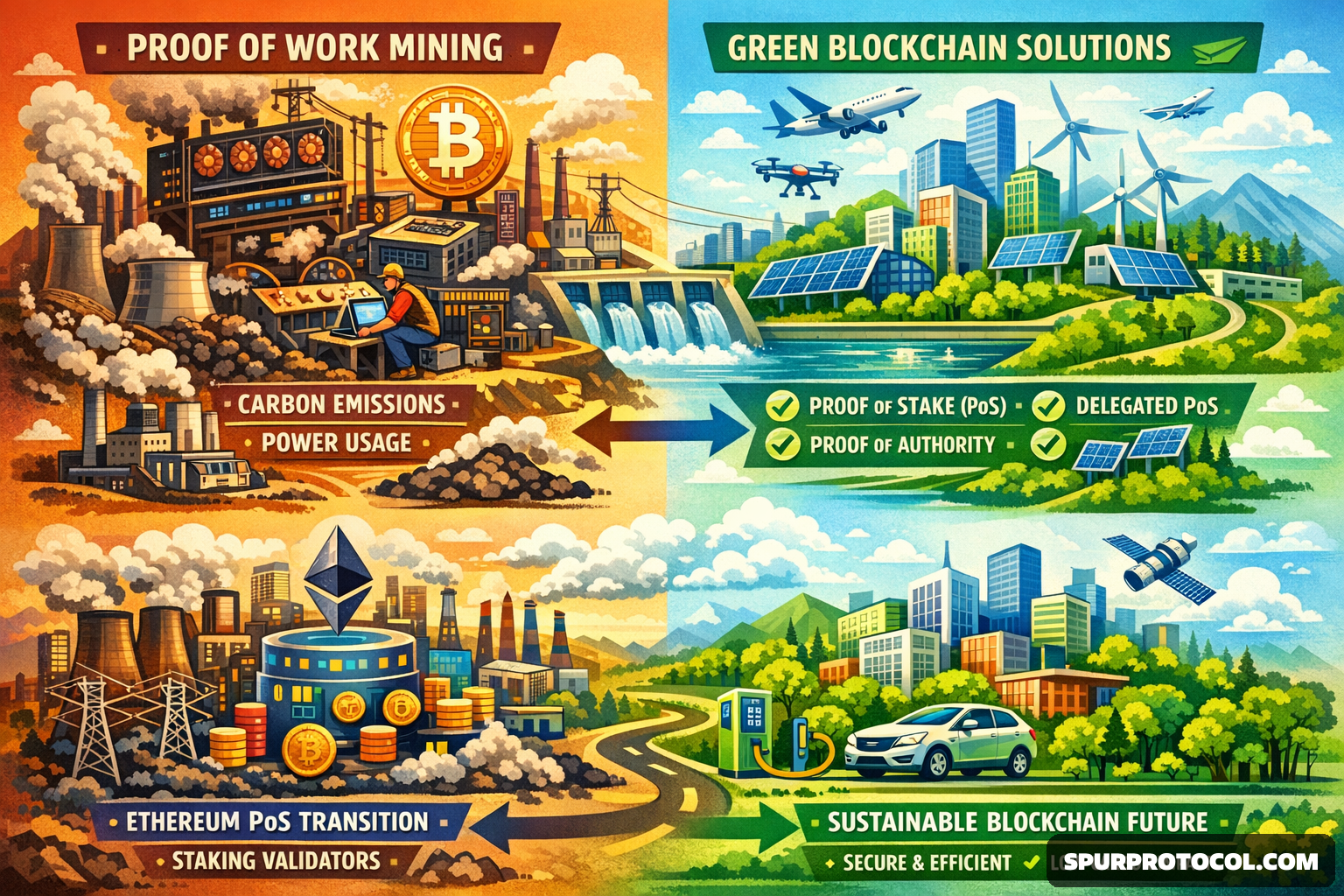
Proof-of-Work (PoW) blockchains laid the groundwork for modern cryptocurrency. Networks like Bitcoin rely on mining—a process where specialized computers compete to solve cryptographic puzzles—in order to validate transactions and keep the network secure. This model has proven extremely resilient and decentralized. However, its heavy energy consumption has raised serious environmental concerns, pushing the industry to explore more sustainable alternatives.
Go Back
🕒 4:49 PM
📅 Feb 27, 2026
✍️ By Goko7
Why PoW Is Criticized for Energy Consumption
At its core, PoW depends on constant computational competition. Thousands of mining machines operate around the clock, consuming electricity regardless of whether they successfully validate a block. As more miners join the network, the difficulty increases, which leads to even greater energy demand.
This growing consumption has two major implications:
Increased carbon emissions, especially when powered by fossil fuels
Pressure on local energy infrastructure in regions with high mining activity
As sustainability becomes a global priority, blockchain developers are under pressure to maintain strong security while significantly reducing environmental impact.
Proof-of-Stake: A Major Shift Toward Efficiency
Proof-of-Stake (PoS) has emerged as the most widely adopted alternative to PoW. Instead of miners competing with hardware, PoS selects validators based on how much cryptocurrency they lock (or “stake”) in the network.
This change removes the need for energy-intensive computation. Validators are chosen algorithmically, which reduces electricity consumption by orders of magnitude while preserving network integrity.
The transition of Ethereum from PoW to PoS demonstrated that even large, established blockchain networks can successfully adopt more energy-efficient systems. The shift maintained network security while dramatically lowering its energy footprint.
Other Emerging Low-Energy Consensus Models
Beyond PoS, several other consensus mechanisms are gaining traction:
Delegated Proof-of-Stake (DPoS): Token holders vote for a smaller group of validators, improving efficiency and speed
Proof-of-Authority (PoA): Trusted validators are pre-selected, eliminating resource competition entirely
Hybrid models: Combine elements of PoW and PoS to balance security and sustainability
Some blockchain projects are also powering infrastructure with renewable energy, further reducing environmental impact.
However, these alternatives come with trade-offs. For example:
PoS systems may favor wealthier participants with larger stakes
Permission-based systems can reduce decentralization
Hybrid models may add complexity to network design
The Future of Sustainable Blockchain Technology
Green alternatives to PoW are no longer theoretical—they are already functioning at scale. Advances in consensus mechanisms and infrastructure design prove that blockchain networks can remain secure and decentralized without excessive energy consumption.
No solution is perfect, and trade-offs remain. But the overall direction is clear: the industry is steadily moving toward more efficient and environmentally responsible models.
As sustainability becomes a core requirement rather than an option, energy-efficient consensus mechanisms are likely to define the next generation of blockchain systems.