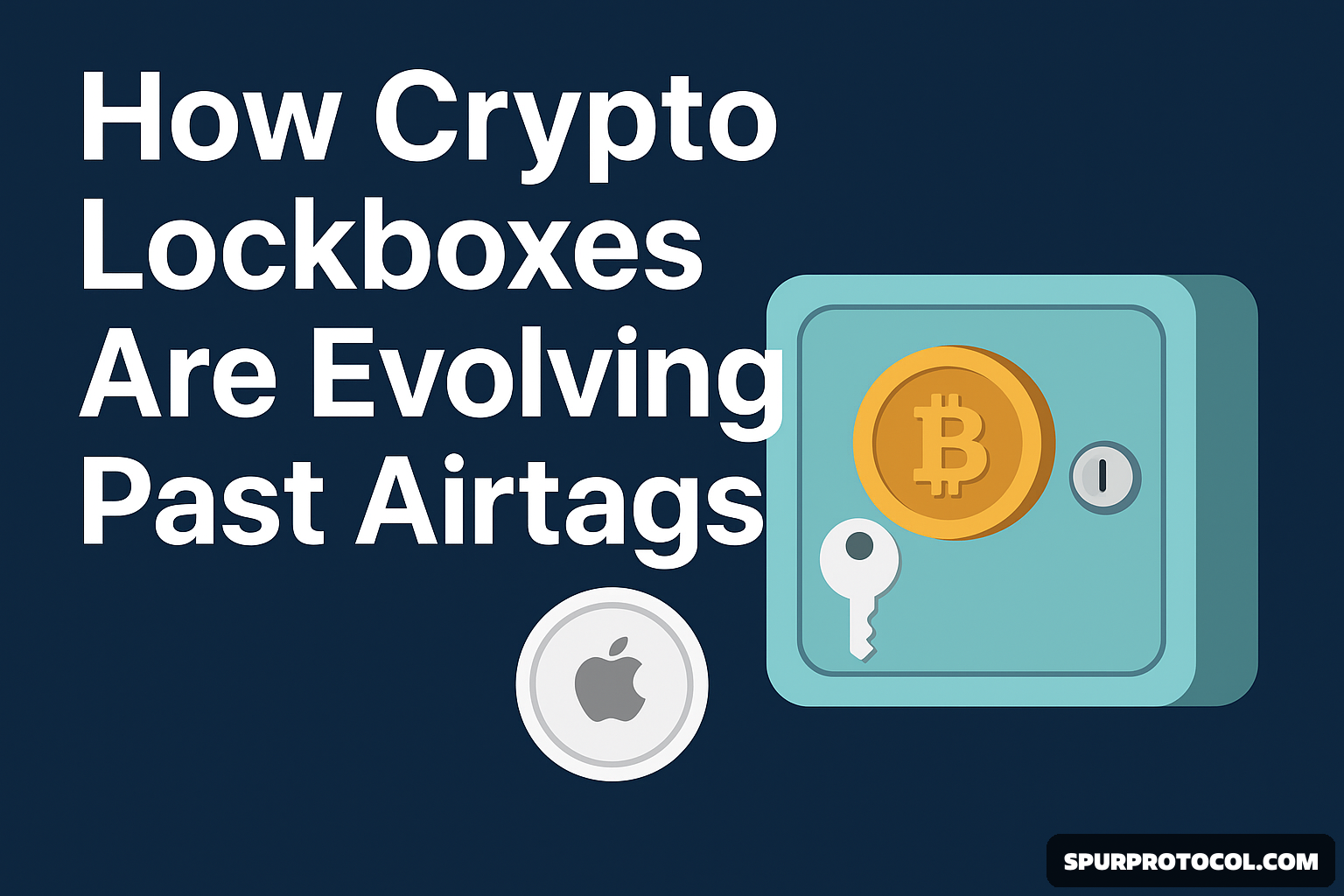
How Crypto Lockboxes Are Evolving Past Airtags
Digital asset security is shifting fast. Crypto lockboxes are giving people a level of control that basic location trackers can’t touch
Go Back
🕒 7:12 AM
📅 Dec 09, 2025
✍️ By Uday3327
Here’s the thing. We’re moving into a world where digital assets matter as much as the physical ones we keep in a safe.
That shift is why crypto lockboxes are catching on. They’re built to protect something far more complex than a suitcase or a set of keys. They protect ownership.
Think about what Airtags do. They help you find something you misplaced. Useful, sure, but that’s where their job ends.
A crypto lockbox works on a completely different level because it isn’t about locating an object.
It’s about proving that what’s inside the box belongs to you, can be transferred only by you, and can be verified by anyone without exposing your identity.
What this really means is that the lockbox becomes the bridge between the physical world and the blockchain.
When you store tokens, passwords, or asset keys inside one, you’re locking away the single point that controls everything else.
The device tracks tampering, logs interactions, and can even require multi-step verification to open.
Airtags can tell you a bag is moving.
A crypto lockbox can tell you how, when, and by whom someone tried to open your gateway to digital wealth.
Now the conversation gets interesting when you look at real-world use. People are using these lockboxes to secure hardware wallets, rare NFTs, seed phrases, and even high-value contracts.
Instead of trusting a cloud service or a flimsy safe, they’re relying on a device that was built with digital ownership in mind.
Some lockboxes integrate with apps that send instant alerts, create time-stamped proofs, or let you assign recovery contacts. You aren’t just storing an item. You’re creating a verifiable chain of custody around it.
Security aside, the appeal also comes from simplicity. You don’t need to be a coder to protect what you own.
The lockbox handles the encryption. You handle the access. That’s it.
This shift is pushing people to think differently about what they consider valuable. A seed phrase that looks like a list of random words can be worth more than everything in your wallet. So the place you store it matters.
The big idea here is that Airtags solve inconvenience. Crypto lockboxes solve vulnerability. One helps you track.
The other helps you defend. And as digital assets continue to shape how people work, invest, and store value, the tools we use to protect those assets have to evolve with us.
The rise of crypto lockboxes is basically a sign of where personal security is heading. A future where ownership isn’t proven by possession, but by cryptography.
A future where the line between physical and digital security disappears. And a future where losing a key doesn’t mean losing everything.