How Decentralized Exchanges Really Work: Liquidity Pools, AMMs, And Your Role
From Order Books to Algorithms: Why DEXs Let You Trade Without Giving Up Your Crypto
Go Back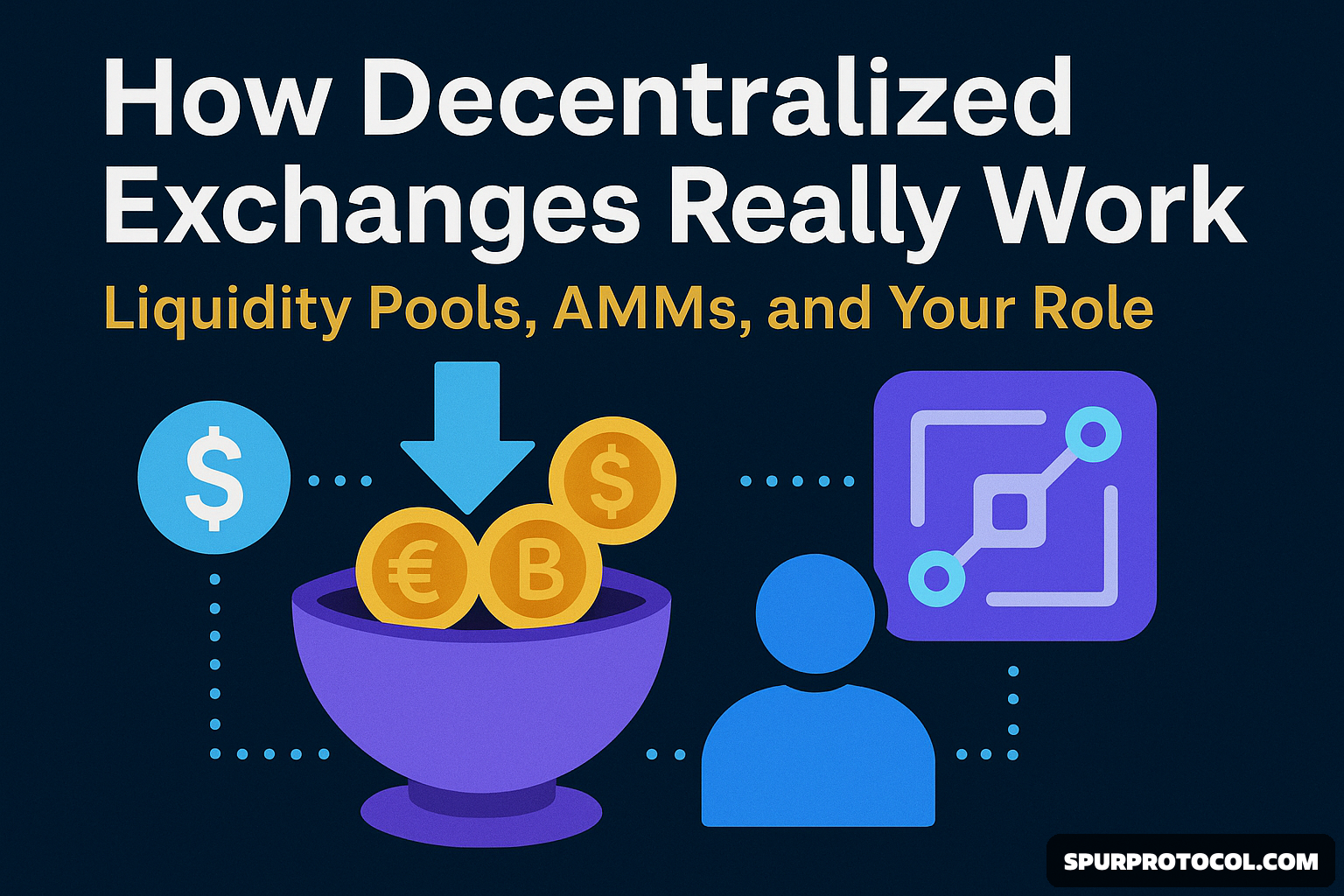
🕒 8:32 AM
📅 Dec 05, 2025
✍️ By Uday3327
From Order Books to Algorithms: Why DEXs Let You Trade Without Giving Up Your Crypto
Go Back
🕒 8:32 AM
📅 Dec 05, 2025
✍️ By Uday3327
Decentralized exchanges (DEXs) are on‑chain marketplaces where users swap tokens directly from their own wallets instead of trusting a centralized company to hold funds.
Trades are handled by smart contracts, which are pieces of code on a blockchain that automatically execute swaps when conditions are met.
Most leading DEXs use an Automated Market Maker (AMM) model instead of the traditional order book used by centralized exchanges.
In an AMM, traders interact with liquidity pools—smart contracts that hold pairs of tokens—rather than with other individual traders’ orders.
A liquidity pool might hold a pair like ETH–USDC, funded by users called liquidity providers (LPs) who deposit both tokens in a fixed ratio.
The AMM uses a pricing formula that adjusts the token price based on the ratio inside the pool, so every trade slightly changes the pool composition and therefore the price.
When you swap on a DEX, the smart contract takes the token you are selling, sends you the token you are buying from the pool, and updates the pool balances and prices in a single transaction.
You keep custody of your wallet keys throughout the process, which means the protocol never holds your funds the way a centralized exchange does.
Liquidity providers earn a share of trading fees paid by swappers, which is why people are willing to lock assets into pools.
However, LPs face a specific risk called impermanent loss, which happens when token prices move a lot while funds are sitting in the pool, and the final value can be lower than simply holding the tokens.
For everyday users, the main benefits of DEXs are permissionless access, a wide range of tokens, and the ability to trade directly from self‑custodial wallets.
The trade‑off is that you must understand gas fees, slippage, and liquidity depth, because there is no centralized support team to reverse mistakes or compensate bad trades.
As protocols like SpurProtocol continue teaching concepts such as wallets and security, understanding how DEXs work is the next logical step for moving from passive holder to active DeFi user.
Once users grasp liquidity pools and AMMs, they can evaluate new DeFi opportunities more intelligently instead of blindly chasing “high APR” screenshots.