Liquid Staking Explained: How DeFi Lets You Stake Without Locking Your Crypto
Earn Staking Rewards, Keep Your Tokens Moving: The Rise of Liquid Staking and LSD Tokens
Go Back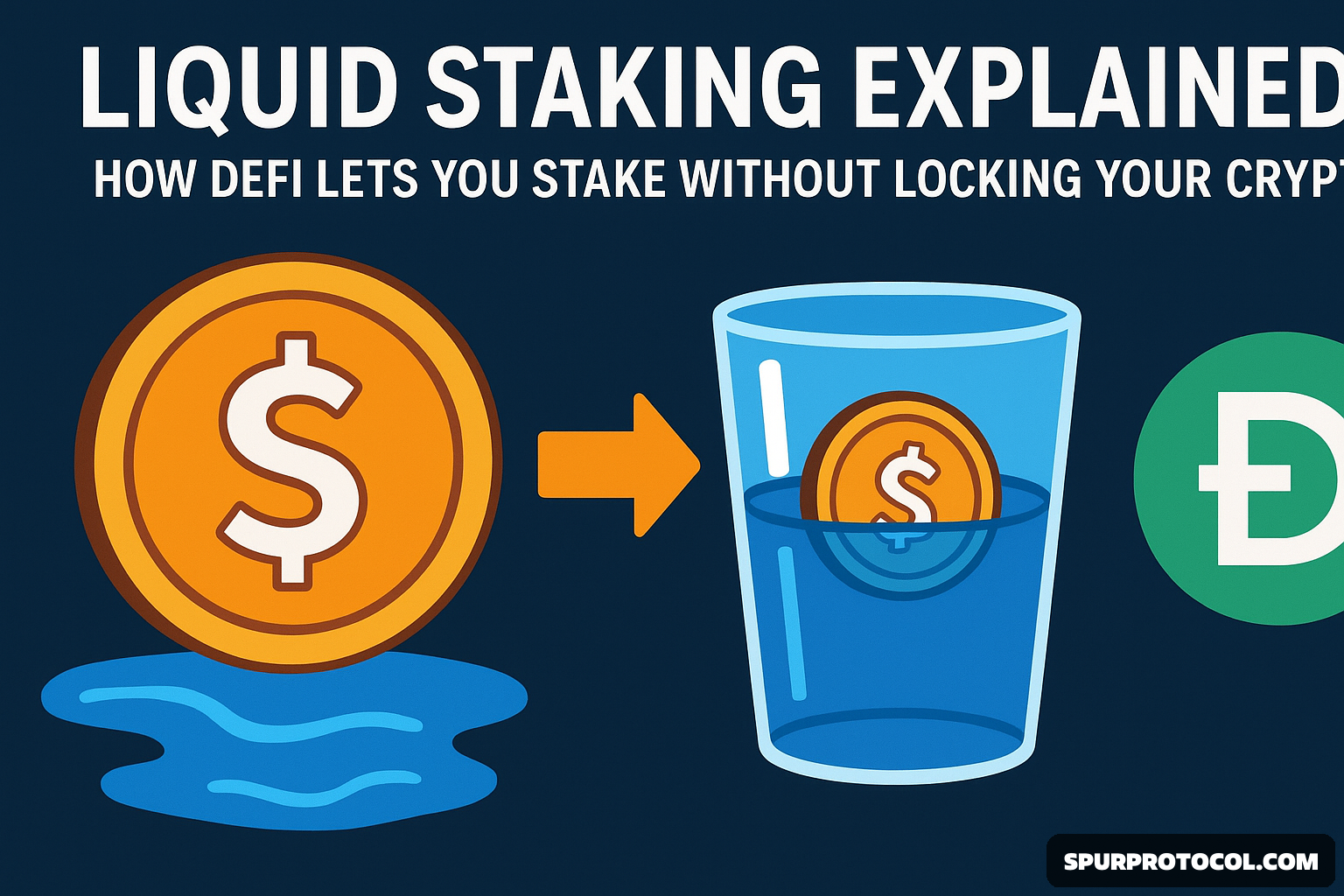
🕒 4:40 AM
📅 Dec 06, 2025
✍️ By Uday3327
Earn Staking Rewards, Keep Your Tokens Moving: The Rise of Liquid Staking and LSD Tokens
Go Back
🕒 4:40 AM
📅 Dec 06, 2025
✍️ By Uday3327
In a normal proof‑of‑stake (PoS) network, staking means locking your coins to help secure the chain and earn rewards, but those coins cannot be moved or used until the unbonding period ends.
Liquid staking changes this by giving you a separate token that represents your staked assets, so you can keep earning rewards while still using a “receipt” version of your coins in DeFi.
When you stake through a liquid staking protocol, your original tokens are delegated to validators just like traditional staking, but the protocol issues you a liquid staking token (often called an LST or LSD) such as stETH or rETH.
This derivative token tracks the value of your staked deposit plus rewards and can be transferred, traded, or used as collateral across other protocols.
The main benefit is capital efficiency: instead of choosing between staking yield and DeFi opportunities, you can do both at the same time.
For example, a user might stake ETH, receive an LST, then supply that LST into a lending market or liquidity pool, effectively layering DeFi yield on top of base staking rewards.
Under the hood, liquid staking platforms manage validator operations, slashing risks, and reward distribution on behalf of many users.
Rewards are often reflected by gradually increasing the value of each LST or by changing the exchange rate between the LST and the underlying token, instead of sending separate reward payouts to every wallet.
However, liquid staking is not free money; it introduces its own risk stack.
Users depend on the protocol’s smart contracts and validator set, face potential depegs where the LST trades below the underlying asset, and can be exposed to extra risk if they use LSTs as collateral in leveraged strategies.