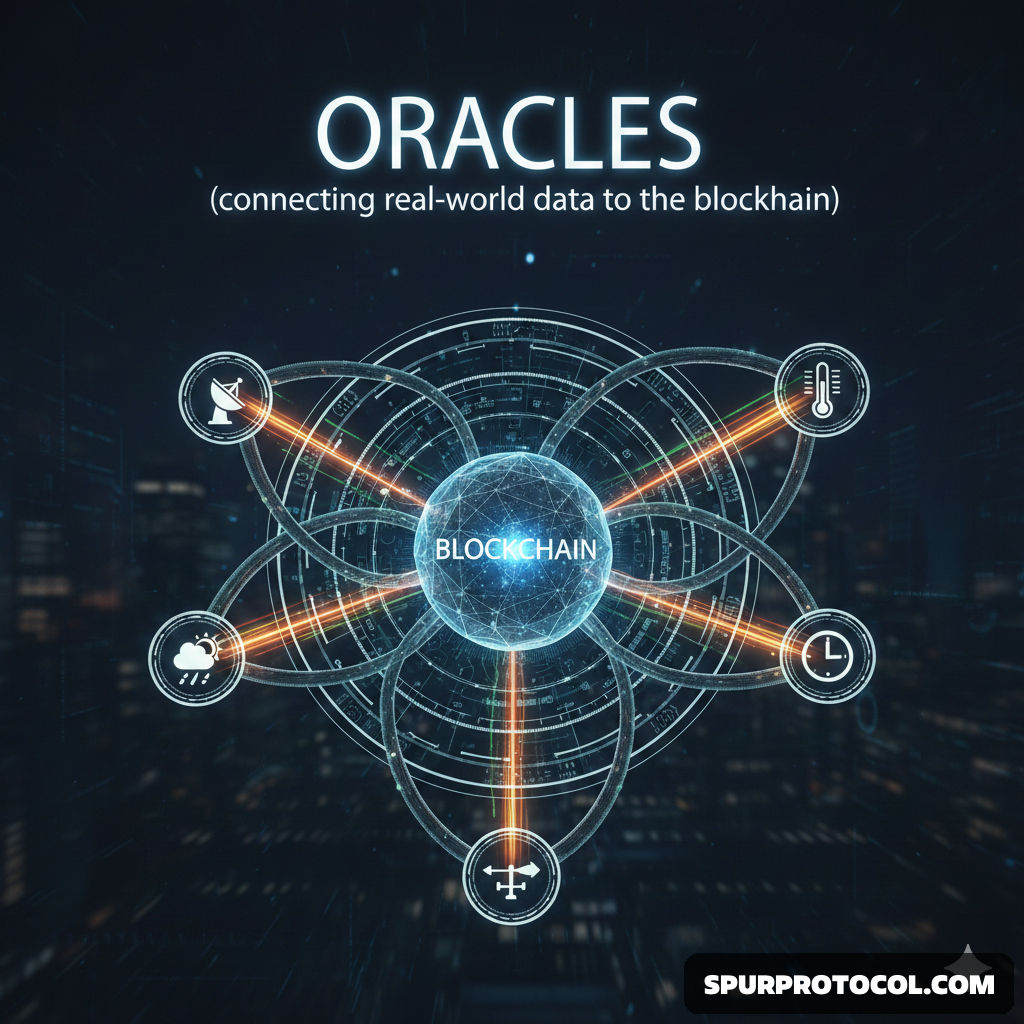
Oracles are categorized by how they handle data and where that data originates:
Software Oracles:
Connect to digital sources like websites and APIs to provide real-time data such as cryptocurrency prices.
Hardware Oracles:
Use physical sensors (e.g., IoT, RFID scanners) to feed data from the physical world, like temperature for supply chain monitoring.
Inbound vs. Outbound:
Inbound oracles bring external data to the blockchain (e.g., weather updates for insurance), while outbound oracles trigger real-world actions from the blockchain (e.g., unlocking a smart lock upon payment).
Centralized vs. Decentralized (DONs): Centralized oracles are faster but create a single point of failure. Decentralized Oracle Networks (DONs), such as Chainlink, use multiple nodes to reach a consensus, ensuring data reliability and tamper-resistance.
The "Oracle Problem"
The "oracle problem" is the conflict between a blockchain's trustless nature and its reliance on potentially untrustworthy external data. If an oracle provides false or manipulated data, the smart contract will execute based on those errors—often irreversibly—leading to financial loss. DONs mitigate this through redundancy, cryptographic proofs, and economic incentives.
Core Use Cases (2025)
DeFi (Decentralized Finance):
Providing accurate price feeds for lending, borrowing, and stablecoin pegs.
Insurance:
Automating claims for weather-based crop insurance or flight delays using verifiable event data.
Gaming:
Delivering Verifiable Random Function (VRF) data for fair and unpredictable gameplay or NFT traits.
Supply Chain:
Tracking the movement and condition of goods via IoT sensors to trigger automated payments upon delivery.
Real-World Assets (RWA):
Enabling the tokenization of assets like real estate or art by providing real-time valuation and ownership verification.
Notable Platforms
Chainlink:
The industry standard for decentralized data, computation, and cross-chain interoperability.
Pyth Network:
Specializes in high-frequency, low-latency financial market data using a "pull" model.
Band Protocol:
A cross-chain oracle focused on high scalability and data flexibility across different blockchains.