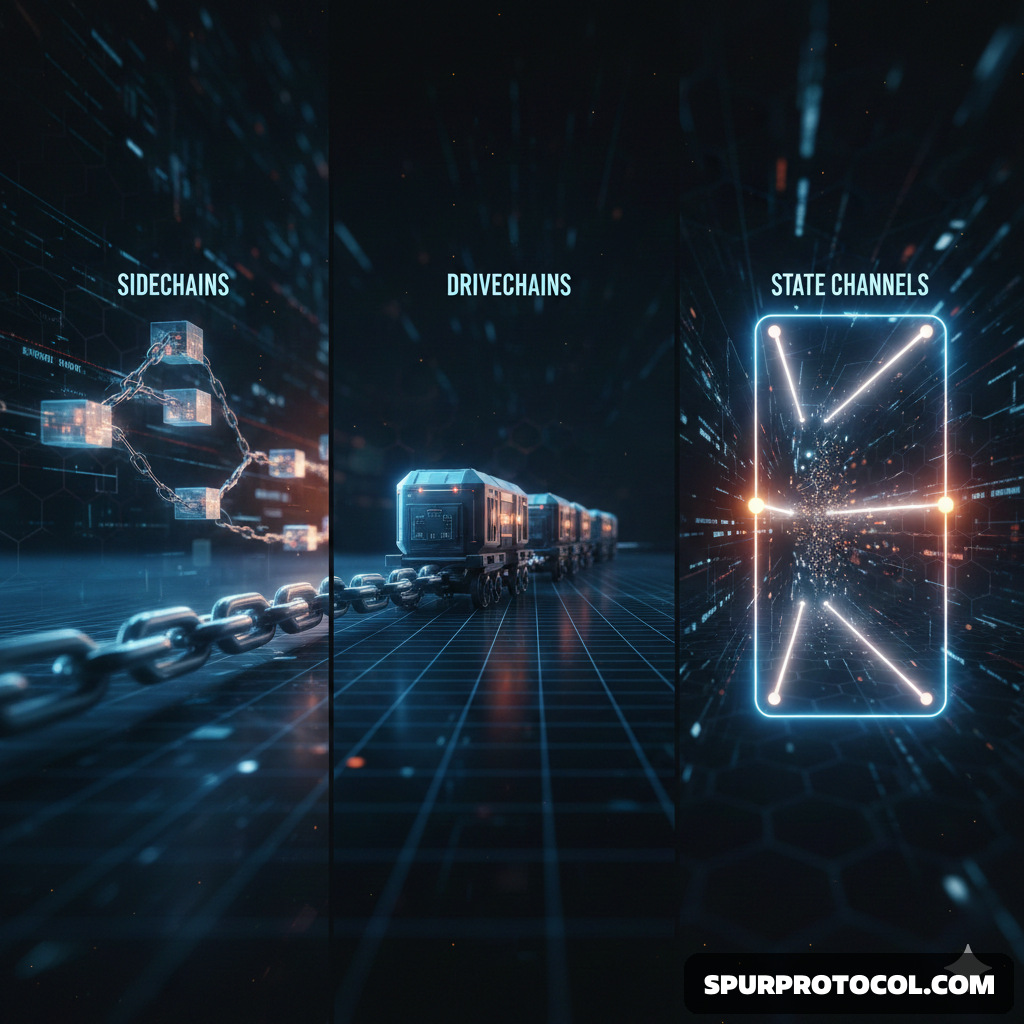
Sidechains, Drivechains, And State Channels
Sidechains, Drivechains, and State Channels are blockchain scaling solutions that move transactions off the main chain (like Bitcoin or Ethereum) for speed and lower costs, but differ in implementation.
Go Back
🕒 4:33 PM
📅 Jan 16, 2026
✍️ By chyneyz
SidechainsWhat they are: Independent blockchains running parallel to a main chain, linked by a "two-way peg" for asset transfer.
How they work: Assets are locked on the main chain and minted on the sidechain; transactions happen on the sidechain (with its own consensus) and can be moved back.
Pros: Scalability, new features (smart contracts, different rules), experimentation.
Cons: Security relies on the sidechain's validators (often a federation), not the main chain's full security.
Drivechains (Bitcoin-specific)
What they are: A decentralized type of sidechain for Bitcoin, proposed via BIPs.
How they work: Miners control the locked Bitcoin (using Hashrate Escrow), voting on when to release funds to the sidechain.
Key Difference: Borrows the main chain's native coin (BTC), with security linked to Bitcoin's hashrate, requiring a soft fork for Bitcoin integration.
State Channels (e.g., Lightning Network)
What they are: Off-chain payment channels between two or more parties for direct, fast transactions.
How they work: Open a channel with an initial on-chain transaction, conduct many instant transactions off-chain, then close with a final on-chain transaction.
Pros: High privacy (only open/close on-chain), instant finality, massive scale.
Cons: Requires locking funds, can be complex, not for all transaction types.