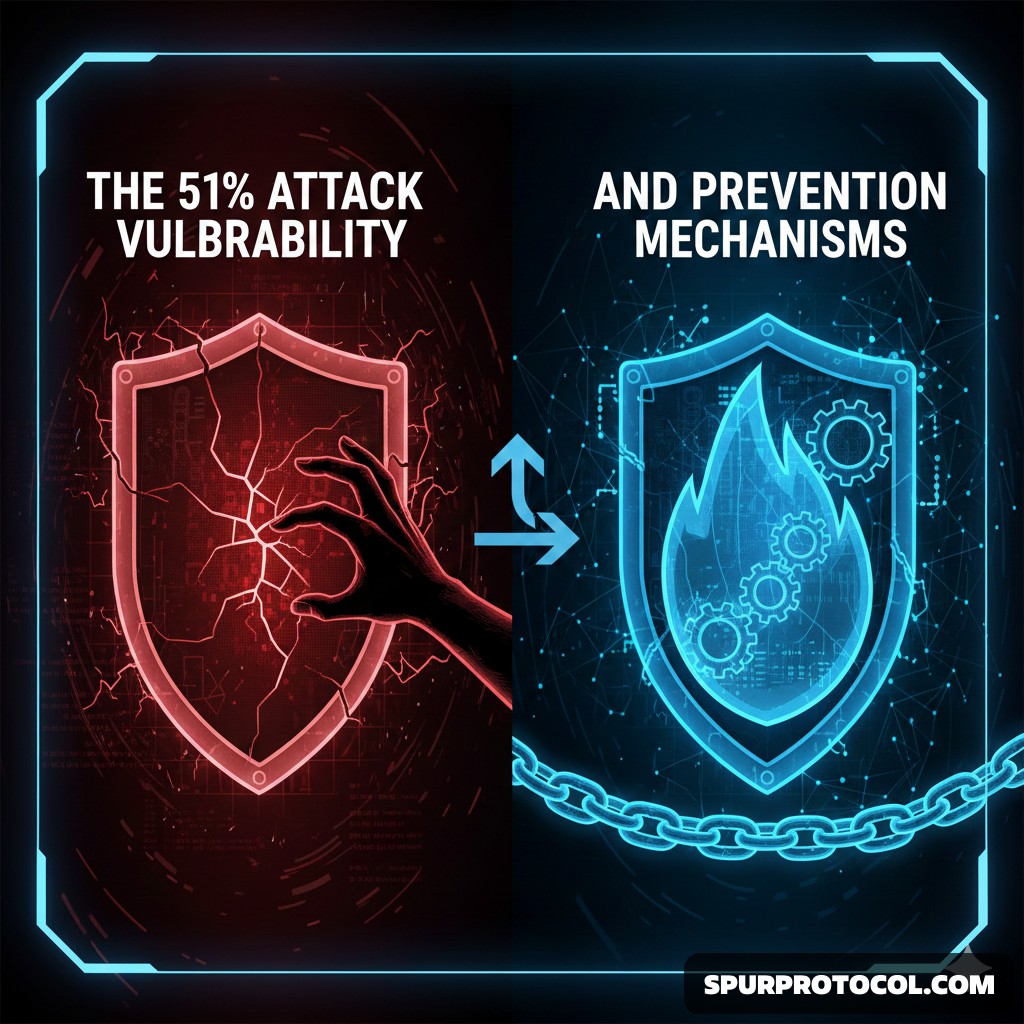
The 51% Attack Vulnerability And Prevention Mechanisms
While it is theoretically possible on any decentralized network, the sheer cost makes it nearly impossible for massive networks like Bitcoin, whereas smaller "altcoins" are frequent targets.
Go Back
🕒 6:03 PM
📅 Jan 15, 2026
✍️ By chyneyz
. How the Vulnerability WorksA successful 51% attack allows the attacker to disrupt the consensus mechanism. They gain enough "voting power" to override the honest majority.
What an Attacker CAN Do:
Double-Spending: This is the most common goal. An attacker sends coins to an exchange, waits for the confirmation, sells them for cash, and then uses their majority power to "erase" the original transaction from the blockchain, reclaiming their coins.
Transaction Censorship: They can prevent certain users from sending transactions or block all transactions from being confirmed, effectively freezing the network.
Chain Reorganization (Reorgs): They can create a private, longer version of the blockchain and then "broadcast" it to the network, forcing the honest nodes to discard their own history in favor of the attacker's.
What an Attacker CANNOT Do:
Steal coins from your wallet: They cannot generate your private key or sign transactions on your behalf.
Create coins out of thin air: They must still follow the protocol's rules for block rewards.
Change old history: Reversing transactions that happened weeks or months ago is computationally impossible even with 51% power.
2. Prevention Mechanisms
Blockchain developers use several layers of defense to make an attack either physically impossible or economically ruinous.
A. Economic Deterrents (Game Theory)
Cost of Entry: In a large PoW network like Bitcoin, an attacker would need billions of dollars in specialized hardware (ASICs) and electricity. The cost of the attack would likely exceed any potential profit from double-spending.
Market Devaluation: If a network is successfully attacked, its value usually crashes. If the attacker owns 51% of the assets, they are essentially destroying their own wealth.
B. Consensus Upgrades
Proof of Stake (PoS): In PoS (e.g., Ethereum), an attacker must own 51% of the total staked supply. If they attack the network, they can be "slashed"—meaning their entire stake is permanently deleted by the protocol.
Hybrid PoW/PoS: Some networks require a block to be confirmed by both miners (computing power) and stakers (coin ownership), forcing an attacker to control both resources simultaneously.
C. Technical Safeguards
Merged Mining: Smaller chains can "hitch a ride" on the security of larger chains. For example, Namecoin is mined simultaneously with Bitcoin, meaning an attacker would need to overpower the Bitcoin network to attack Namecoin.
Checkpoints: Developers can hard-code "checkpoints" into the software. These are specific blocks that are "set in stone." Even if an attacker creates a longer chain, the network will refuse to revert past a checkpoint.
Delayed Finality: Exchanges often protect themselves by requiring a high number of confirmations (e.g., 50+ blocks) for smaller or newer coins before allowing a user to withdraw funds.