The Analysis Of Network Congestion And Fee Markets
In cryptoeconomics, the "Fee Market" is the mechanism used to resolve a fundamental imbalance: infinite demand for block space versus finite supply of network throughput.
Go Back
🕒 4:33 PM
📅 Jan 08, 2026
✍️ By chyneyz
In cryptoeconomics, the "Fee Market" is the mechanism used to resolve a fundamental imbalance: infinite demand for block space versus finite supply of network throughput.When demand exceeds supply, the network becomes congested. Fee markets act as a "pressure valve," using price to determine which transactions are important enough to be included in the next block.
1. How Congestion Happens: The "Bus" Analogy
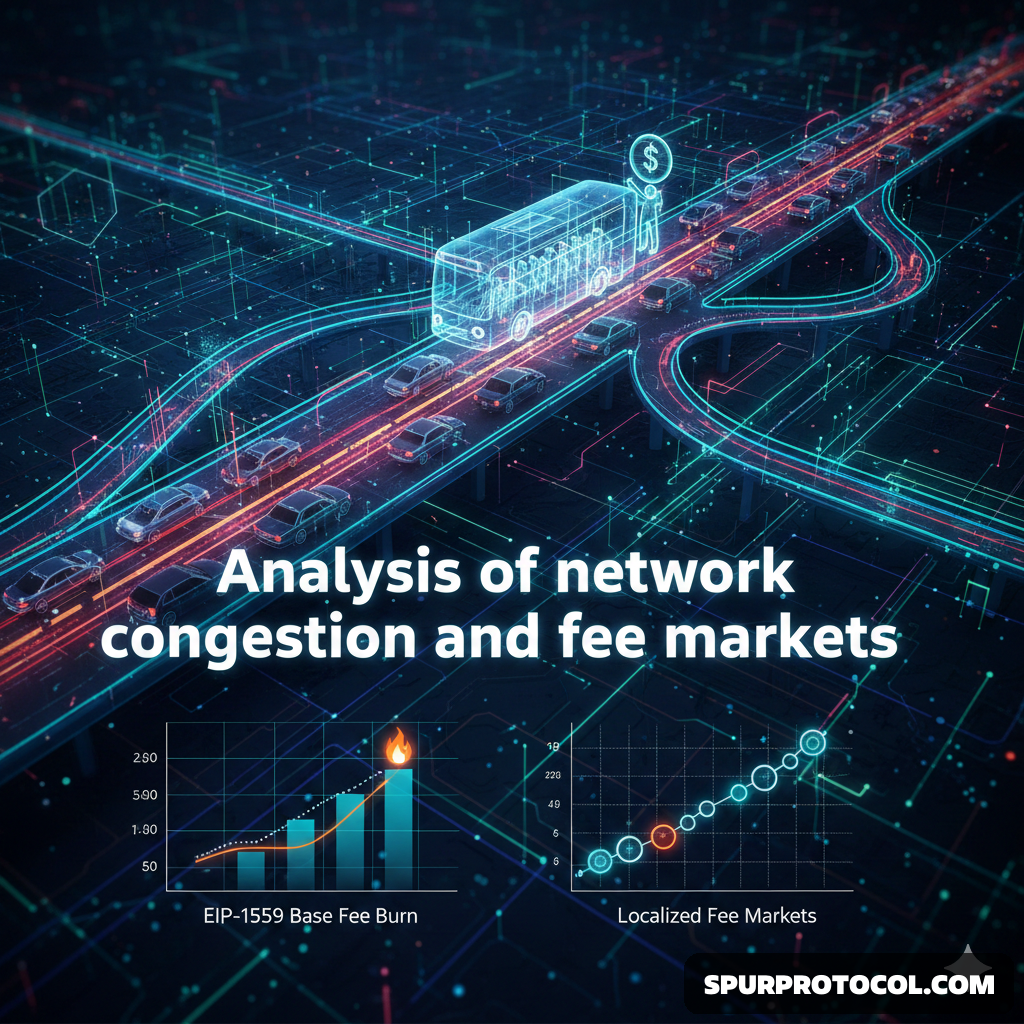
Think of a blockchain as a bus service (the network) where a new bus arrives every few seconds (a block).
The Seats: Each bus has a fixed number of seats (block size/gas limit).
The Passengers: Users wanting to send transactions.
The Bidding: When more people are at the stop than there are seats on the bus, the "bus driver" (validator) picks the passengers who offer the highest tip.
2. Evolution of Fee Markets
The design of these markets has evolved significantly to handle "bidding wars" and improve user experience.
A. First-Price Auctions (The "Old" Way)
Used by Bitcoin and "Legacy" Ethereum. Users bid a price per unit of data.
The Problem: It’s a blind auction. Users don't know what others are bidding, so they often overpay by 50\% or more just to be "safe," or they underbid and get stuck in the queue for hours.
Outcome: High "welfare loss" and unpredictable fees.
B. EIP-1559: The "Base Fee" Model (The "New" Way)
Ethereum's 2021 upgrade changed the game by introducing a market rate.
Base Fee: A protocol-set price that everyone must pay. If the previous block was more than 50% full, the base fee automatically increases by 12.5%. If it was less than 50% full, it decreases.
The Burn: The base fee is burned (destroyed), making ETH deflationary.
Priority Fee (Tip): An optional small tip to validators to skip the line during extreme spikes.
Benefit: Fees become predictable. Your wallet can tell you exactly what the "market rate" is, preventing overpayment.
C. Localized/Multidimensional Fee Markets (The Solana/Advanced Way)
Traditional markets are "global"—if a popular NFT drop happens, it makes sending a simple $10 payment to a friend expensive for everyone.
The Design: Modern networks like Solana use Localized Fee Markets. If demand spikes for one specific smart contract (like a specific NFT mint), only transactions interacting with that contract pay higher fees. The rest of the network remains cheap.
3. The "Economic Degradation" vs. "Technical Degradation"
Different networks handle extreme congestion in different ways:
Economic Degradation (Ethereum): The network never "breaks," but it becomes so expensive that only "whales" can afford to use it. The security holds, but the utility for average users vanishes.
Technical Degradation (High-Throughput Chains): Fees stay low, but the sheer volume of data can overwhelm individual nodes, leading to "forking," delayed finality, or temporary network restarts.
Key Takeaway: High fees are not a "bug"; they are a sign that the market is working to protect the network from being spam-attacked. However, they indicate a need for Scaling (moving transactions to Layer 2).