The End Of Paperwork: Smart Contracts
Imagine a contract that enforces itself. No lawyers, no arguments, just code.
Go Back
🕒 8:41 AM
📅 Dec 14, 2025
✍️ By PolakaNagendraReddy
In the traditional business world, contracts are just pieces of paper. If you hire a contractor to fix your roof, you sign a paper that says, "I will pay you $1,000 when the job is done." But what happens if they finish the job and you refuse to pay? They have to sue you. It is messy, expensive, and slow.
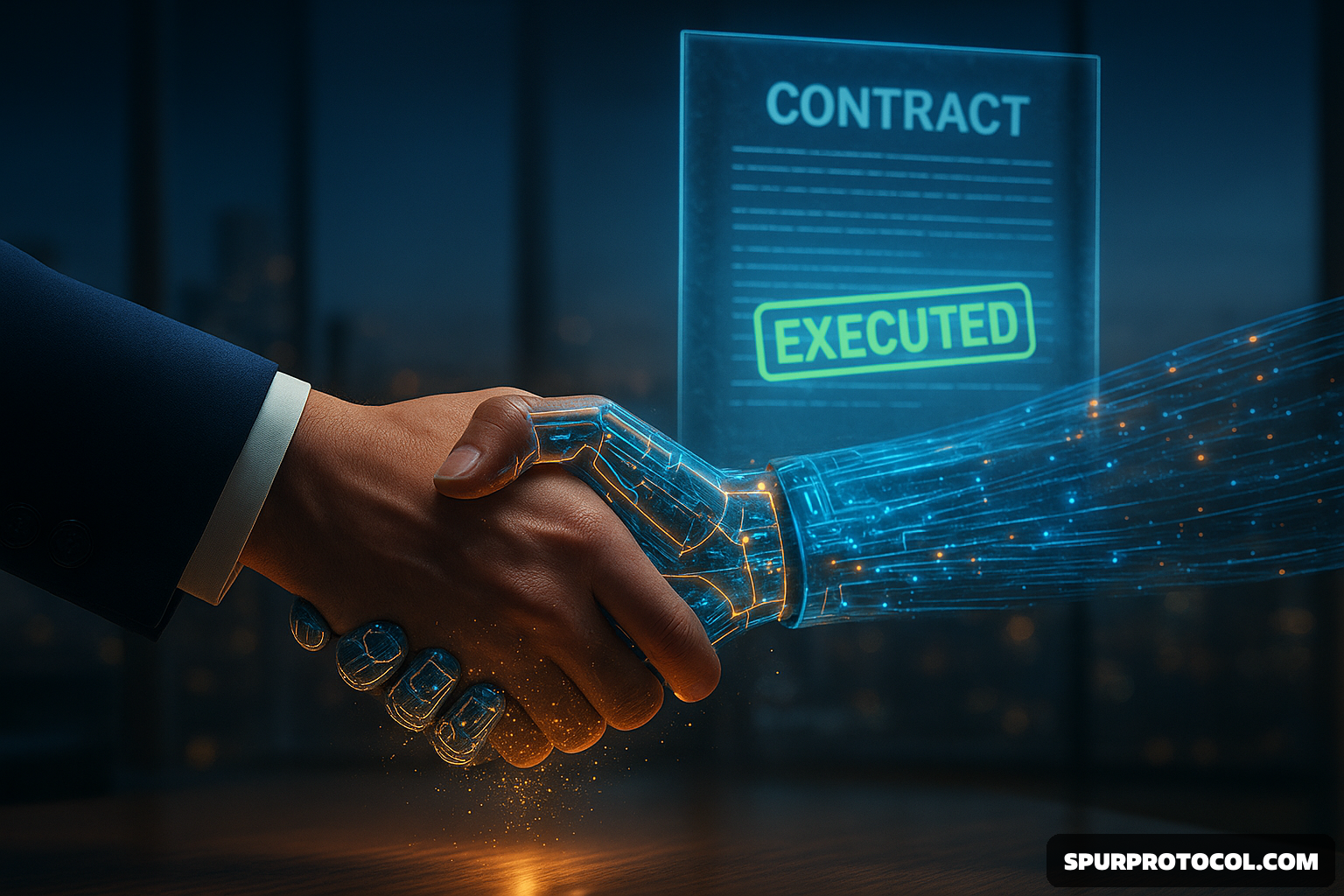
The blockchain introduces something called a Smart Contract. Despite the name, it isn't really a contract in the legal sense; it is a computer program. It is a set of rules written in code that says, "IF this happens, THEN do that." It runs automatically and nobody can stop it.
The best way to understand this is the "Vending Machine" analogy. A vending machine is a smart contract. You don't need a cashier to stand there and trust you. The rule is simple: IF you put in $2.00 and press B4, THEN the machine drops the Snickers bar. It happens every time, without fail, and without human emotion.
Now, imagine applying this to your business supply chain. Let's say you order 100 t-shirts from a supplier. You can put your payment into a Smart Contract. The contract is connected to a GPS tracker on the delivery truck. The moment the truck arrives at your warehouse, the contract automatically unlocks the money and sends it to the supplier.
This creates "Trustless" business deals. You don't need to trust the supplier to ship the goods, and they don't need to trust you to write the check. The code acts as the escrow agent. If the truck never arrives, the smart contract automatically refunds your money.
This technology will eventually replace millions of hours of administrative work. Instead of hiring teams of people to check invoices, verify deliveries, and chase payments, businesses will just deploy code. It makes business faster, cheaper, and more honest for everyone involved.