The Future Of Mining – From Hashrate To Global Energy Infrastructure
Crypto mining has come a long way from its early days. What started as an activity anyone could do on a personal computer has evolved into a highly competitive, industrial-scale sector. Today, mining is no longer just about validating transactions or securing networks — it’s increasingly part of a broader discussion around energy systems, efficiency, and how resources are managed at a global level.
Go Back
🕒 6:15 AM
📅 Mar 20, 2026
✍️ By Goko7
From hobby to industrial operations
In the beginning, mining was accessible to almost anyone. But as network difficulty increased and competition intensified, the landscape changed. The introduction of specialized hardware like ASICs reshaped the industry entirely.
Now, mining is dominated by large-scale operations running thousands of machines simultaneously. These facilities are strategically located in regions with low electricity costs, cooler climates, and favorable regulations. Naturally, this has led to hashrate concentration in certain areas, raising concerns about decentralization and network resilience.
Energy consumption – challenge or opportunity?
One of the most debated aspects of mining is its energy use. Proof-of-work networks require substantial computational power, which translates directly into high electricity demand.
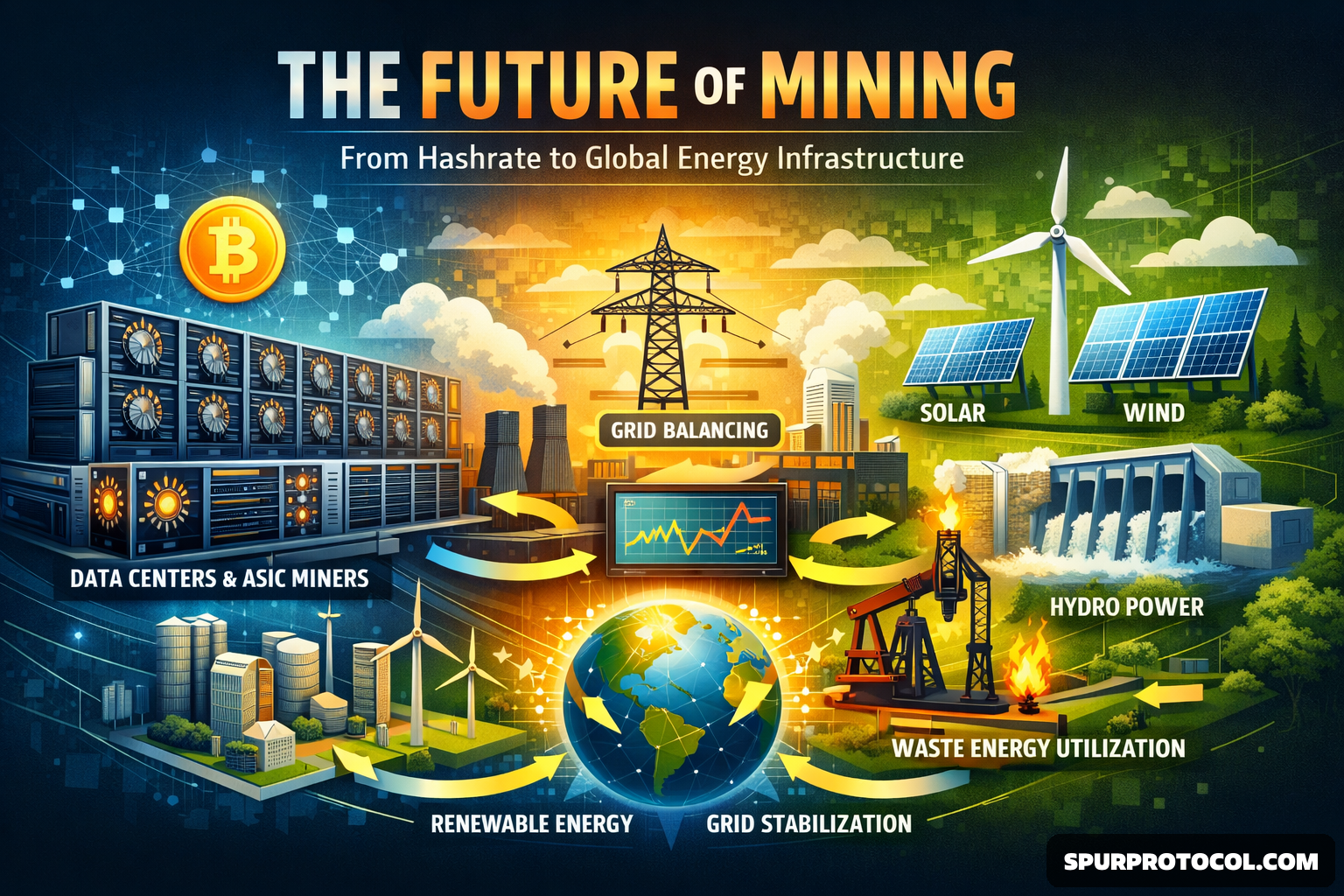
At the same time, this demand is pushing innovation. Many mining operations are shifting toward renewable energy sources such as hydro, solar, and wind. Others are focusing on capturing and using excess or stranded energy that would otherwise go unused.
In some cases, mining facilities are being integrated into energy grids as flexible consumers, adjusting their power usage depending on supply and demand conditions.
A new role in energy infrastructure
As the relationship between mining and energy deepens, a new perspective is emerging: mining as part of energy infrastructure.
Flexible mining operations can help balance power grids by consuming surplus energy during low-demand periods and scaling back when demand rises. In this sense, computational power becomes a tool for optimizing energy distribution rather than just consuming it.
In regions with underdeveloped energy infrastructure, mining projects can also encourage investment in new energy production, potentially supporting local economies and accelerating development.
Challenges and the road ahead
Despite its potential, the industry still faces important challenges. Environmental concerns continue to influence public perception and regulatory decisions. At the same time, the long-term sustainability of proof-of-work systems is being questioned, especially as alternative consensus mechanisms gain traction.
Economic factors also play a critical role
— hardware costs, energy prices, and market volatility all impact the viability of mining operations.
Looking forward, the future of mining will likely depend on how well it aligns with global energy needs. If the industry can demonstrate efficiency, flexibility, and responsible resource use, it could evolve from a purely technical process into a meaningful component of global energy infrastructure.