Web1 Vs. Web2 Vs. Web3 – How Do They Differ In Practice?
The internet has evolved through distinct phases, each changing how people interact with information and with one another. These phases are commonly described as Web1, Web2, and Web3. While the terms are often used together, they represent very different approaches to technology, ownership, and user participation. Understanding how they differ in practice helps clarify where the internet has been—and where it may be heading.
Go Back
🕒 11:34 AM
📅 Jan 22, 2026
✍️ By joenamanga08
Web1: The Read-Only Web
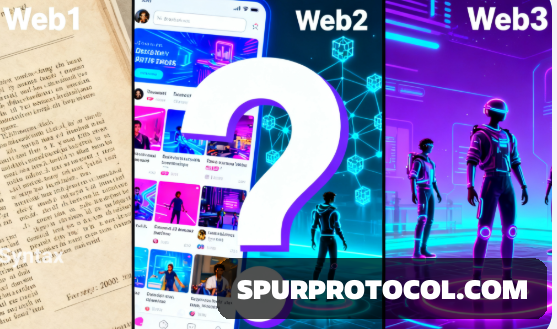
Web1 refers to the earliest version of the internet, roughly from the 1990s to the early 2000s. It was primarily a read-only environment where users consumed information but rarely interacted with it. Websites were static, content was created by a small number of publishers, and user participation was minimal.
In practice, Web1 felt like browsing digital brochures or online newspapers. There were no social media platforms, limited personalization, and almost no user-generated content.
Web2: The Interactive and Social Web
Web2 marked a major shift toward interaction and participation. Users could create content, share opinions, and connect with others through social media, blogs, and online platforms. Companies like Google, Facebook, YouTube, and Amazon became central hubs of activity.
While Web2 made the internet more dynamic and social, it also introduced heavy centralization. Platforms own user data, control algorithms, and monetize attention. In practice, users enjoy convenience and free services, but often at the cost of privacy and data ownership.
Web3: The Decentralized Web
Web3 aims to address the limitations of Web2 by introducing decentralization through blockchain technology. Instead of platforms owning data, users control their digital identities and assets through wallets and cryptographic keys. Applications run on decentralized networks using smart contracts rather than centralized servers.
In practice, Web3 enables peer-to-peer financial services, digital ownership through NFTs, and community governance via tokens. However, it is still developing and faces challenges such as scalability, usability, and regulation.