Web3 And Social Media – A New Model For Digital Ownership And Control
Social media connects billions but raises concerns about data privacy, algorithm control, and creator income. Web3 offers a decentralized model where users own their identity and content.
Go Back
🕒 12:51 PM
📅 Feb 19, 2026
✍️ By Goko7
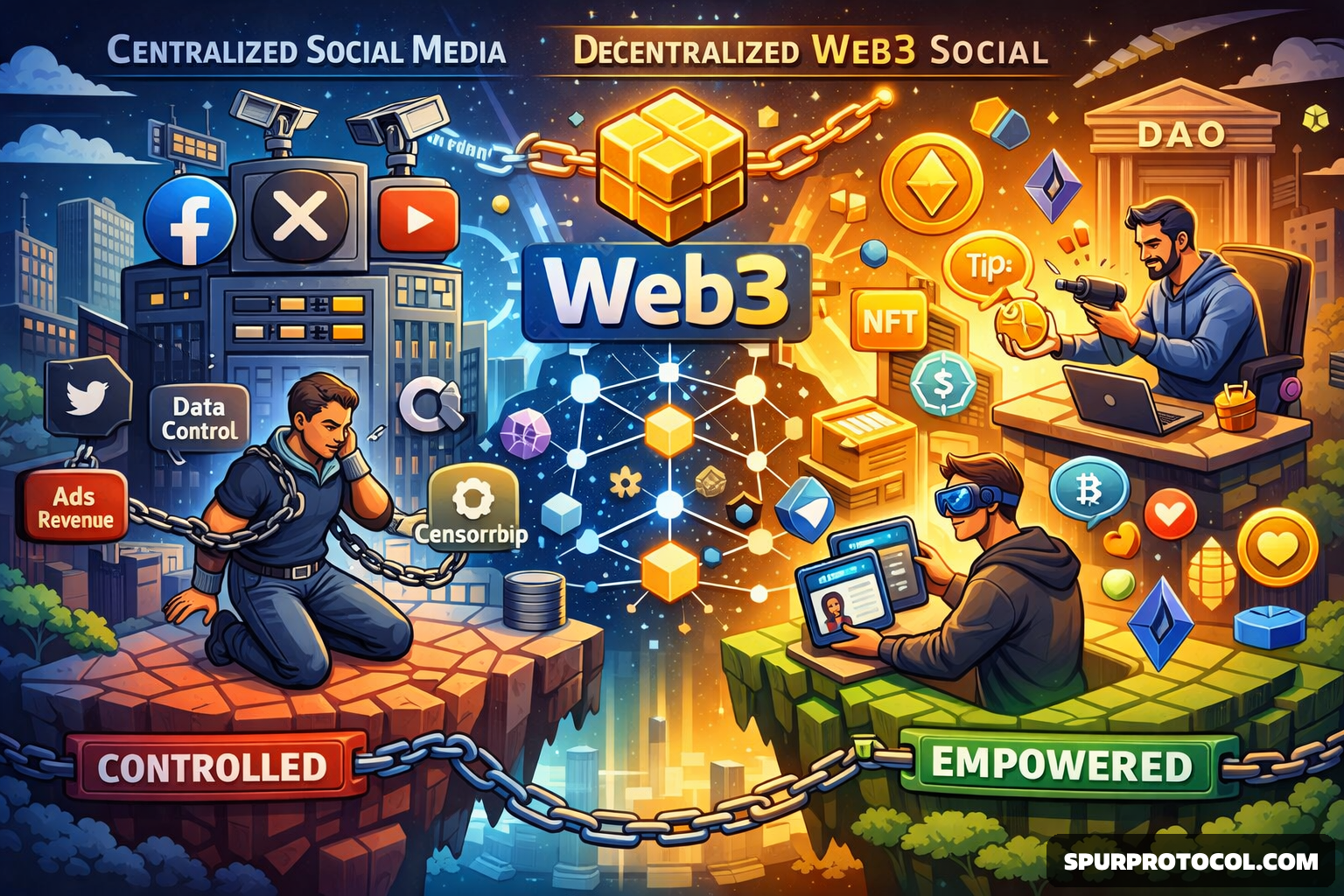
Social media has become an essential part of modern life, allowing people to communicate instantly, share ideas, and grow audiences across the world. Despite its benefits, the current system has drawn increasing criticism. Many users are concerned about how their personal data is collected, how algorithms control visibility, and how difficult it can be for creators to earn fairly. Platforms operated by companies such as Meta Platforms, X, and YouTube remain highly centralized, meaning users ultimately have limited control over their digital presence. Web3 introduces a different framework designed to redistribute that control.
Decentralization and Digital Identity
In traditional social networks, user accounts, content, and follower relationships exist entirely within the platform’s ecosystem. This means users are dependent on the platform’s policies, algorithms, and infrastructure. If rules change or accounts are restricted, users can lose access to their audience and content without warning.
Web3-based platforms operate differently. Using blockchain technologies supported by organizations like the Ethereum Foundation, users can own their digital identity through secure crypto wallets. Instead of being tied permanently to a single platform, profiles and social connections can exist independently, allowing users to transition between platforms while maintaining their audience and online reputation.
This decentralized structure also improves transparency.
Content is stored across distributed networks rather than controlled by one central authority, reducing single points of failure and limiting platform-level control over user data.
Empowering Creators Through Direct Monetization
One of the most promising aspects of Web3 is its potential to improve creator monetization. In the current model, creators often depend on advertising systems and platform-specific programs that offer limited control and unpredictable income.
With Web3, creators can generate revenue through digital assets such as NFTs, community tokens, and automated smart contracts. These tools allow creators to receive direct support from their audience, without relying entirely on intermediaries. This model strengthens the connection between creators and their communities while offering more diversified and independent income streams.
At the same time, decentralized platforms face important challenges. Moderating harmful content without centralized authority is complex, and many Web3 platforms still struggle to deliver the simplicity and speed users expect. Scalability and accessibility remain areas that require further development.
The Future:
Integration Rather Than Replacement
It is unlikely that decentralized platforms will immediately replace existing social media networks. Instead, the transition will likely happen gradually, with hybrid systems combining decentralized ownership with the usability and performance of traditional platforms.
Web3 represents an important shift in how digital platforms can operate. By giving users ownership of their identities and offering creators more control over monetization, decentralized social media introduces a more balanced model. While it may not solve every problem overnight, it lays the foundation for a more transparent and user-focused digital environment moving forward.