Web3 In E-Commerce: Can Decentralized Marketplaces Challenge Amazon’s Dominance?
For more than two decades, online retail has been controlled by centralized platforms, with Amazon leading the industry through its scale, logistics, and customer convenience. However, the emergence of Web3 technologies is introducing a fundamentally different approach to e-commerce —one based on decentralization, blockchain infrastructure,and direct ownership.Instead of relying on a single corporation to manage transactions and data, decentralized marketplaces aim to shift control back to users
Go Back
🕒 4:15 AM
📅 Feb 18, 2026
✍️ By Goko7
This raises a critical question: can decentralized commerce realistically compete with — or even replace — traditional platforms?
How Decentralized Marketplaces Operate
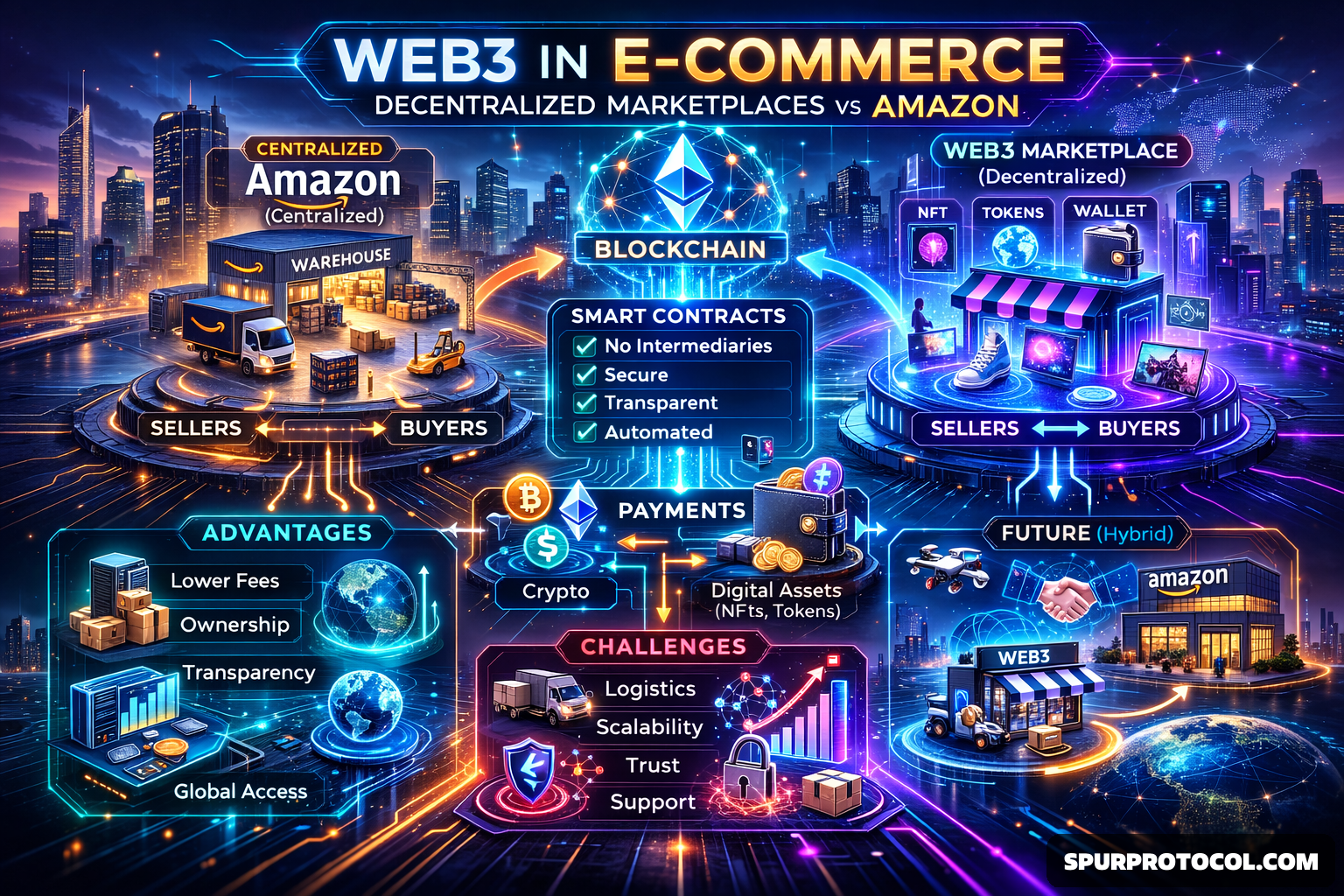
Web3 marketplaces function through smart contracts deployed on blockchain networks such as Ethereum. These smart contracts automate transactions, enforce rules, and remove the need for centralized intermediaries.
In this model:
Sellers list products without requiring platform approval
Buyers interact directly with sellers through blockchain-based systems
Payments are processed using cryptocurrencies or digital tokens
Ownership and transaction history are permanently recorded on-chain
Instead of creating accounts controlled by a company, users connect through digital wallets. This gives them full control over their identity, funds, and purchase history.
Because transactions are verified by decentralized networks rather than a central authority, the system offers greater transparency and reduces reliance on corporate oversight.
Key Advantages of Decentralized Commerce
Decentralized marketplaces introduce several meaningful improvements compared to traditional platforms:
Lower transaction fees
Without intermediaries taking large commissions, sellers retain more of their profits.
True ownership and control
Users control their accounts, assets, and data directly through their wallets, not through a centralized service.
Transparency and trust
All transactions and ownership records are verifiable on the blockchain, making manipulation significantly more difficult.
New economic incentives
Some platforms reward users with tokens for participation, reviews, or governance, creating more community-driven ecosystems.
Reduced censorship risk
Because no single authority controls the platform, sellers have more freedom to operate without sudden restrictions or account suspensions.
The Real-World Challenges Web3 Still Faces
Despite its potential, decentralized e-commerce is still in an early stage and faces several practical limitations.
Logistics infrastructure
Companies like Amazon have spent decades building global fulfillment networks capable of fast, reliable delivery. Decentralized platforms currently lack comparable logistics systems.
User experience and accessibility
Managing wallets, private keys, and crypto payments can still be complex for everyday consumers.
Customer protection and dispute resolution
Centralized platforms provide refunds, mediation, and customer support. Fully decentralized systems are still developing reliable alternatives.
Scalability and adoption
For Web3 marketplaces to compete at scale, they must handle millions of transactions efficiently while maintaining speed and low costs.
Replacement or Evolution?
In the near term, decentralized marketplaces are unlikely to fully replace major centralized platforms. Instead, a hybrid future is more realistic. Traditional e-commerce companies may integrate blockchain payments, digital ownership, and token-based systems while maintaining their logistics and infrastructure advantages.
At the same time, decentralized platforms will likely grow in specific sectors — particularly digital goods, creator economies, and global peer-to-peer commerce.
Conclusion
Web3 is not simply introducing a new platform — it is redefining the foundation of online commerce. By removing intermediaries and giving users direct control over transactions and assets, decentralized marketplaces offer a compelling alternative to traditional models.
While companies like Amazon will remain dominant for the foreseeable future, decentralized commerce is steadily reshaping expectations around ownership, transparency, and digital trade. Rather than immediate replacement, the long-term impact of Web3 will likely be gradual disruption and coexistence — transforming how online marketplaces operate in the years ahead.