What Risks Are Associated With DeFi?
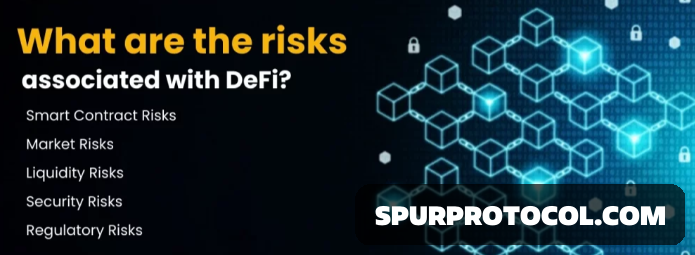
Risks associated with DeFi include technical vulnerabilities like smart contract bugs and flash loan attacks, market risks such as extreme volatility and impermanent loss in liquidity pools.
Go Back
🕒 10:46 PM
📅 Dec 01, 2025
✍️ By Iceprince
Risks associated with DeFi include technical vulnerabilities like smart contract bugs and flash loan attacks, market risks such as extreme volatility and impermanent loss in liquidity pools and regulatory uncertainty which leaves users with little consumer protection. Other risks involve operational issues, like incorrect oracle data, and scams, including honeypots and social engineering, that exploit the open nature of the technology.
Technical and security risks:
1. Smart contract vulnerabilities: Bugs or security flaws in the code can be exploited by hackers to steal funds or manipulate protocol functions.
2. Flash loan attacks: These attacks exploit the ability to borrow large amounts of crypto with no upfront collateral to manipulate asset prices in a liquidity pool, leading to significant user losses.
3. Oracle manipulation: Attackers can maliciously manipulate data feeds (oracles) that protocols use to determine asset prices, leading to incorrect calculations and financial losses.
4. Hacking and scams: DeFi is a target for various hacks and scams, including honeypots, drainers, and social engineering tactics to steal user funds.
Market and financial risks
1. Extreme volatility: The prices of cryptocurrencies are highly volatile, which can lead to significant and rapid losses in investment value.
2. Impermanent loss: When providing liquidity to a pool, if the price of the pooled assets changes significantly relative to each other, the value of your holdings can be less than if you had simply held the assets individually.
3. Liquidity crises: If there is a mass withdrawal of assets, a liquidity crisis can occur, preventing users from accessing their funds.
4. Liquidations: In lending protocols, if the value of a borrower's collateral falls below a certain threshold, it can be automatically liquidated.
Operational and procedural risks
1. Lack of consumer protection: Unlike traditional finance, there are typically no state-run insurance or reimbursement schemes, meaning that if you lose your funds to a hack, they are likely gone forever.
2. Irreversible transactions: Transactions on the blockchain are generally irreversible, so a mistake or fraudulent transaction cannot be easily undone.
3. Human error: Users can make mistakes, such as sending funds to the wrong address, with no way to recover them.
Regulatory and governance risks
1. Regulatory uncertainty: The lack of clear regulations can create legal uncertainties and compliance challenges that could disrupt operations and impact investor confidence.
2. Governance risks: Risks can arise from the governance mechanisms of decentralized protocols, including potential for a malicious actor to gain control of the protocol.